We are delighted to announce the winners of the 2026 UK DRI Recognition Prizes, awarded this week at our annual conference, Connectome. The prizes are designed to recognise and highlight excellence across the UK DRI community.
Mentorship prize
The mentorship award acknowledges and rewards outstanding mentoring that fosters the growth, skills enhancement, and career progression of researchers within the institute. It highlights the importance of mentorship in building a supportive and productive research environment.
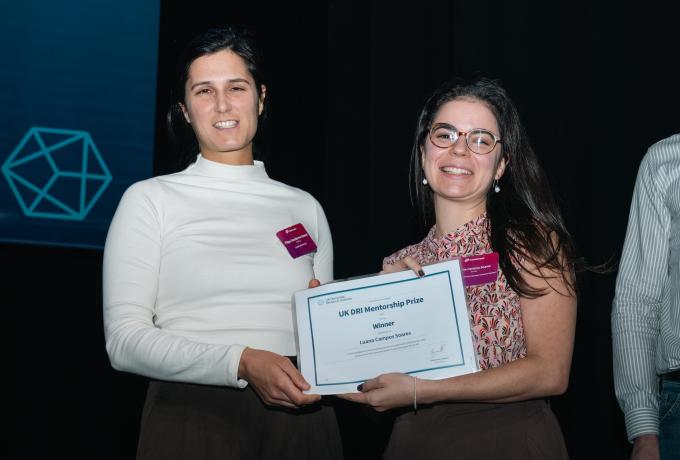
Luana Campos Soares (Salman lab, BHF-UK DRI Centre for Vascular Dementia Research) and Mina Ryten (UK DRI at Cambridge) were the winners of this years award.
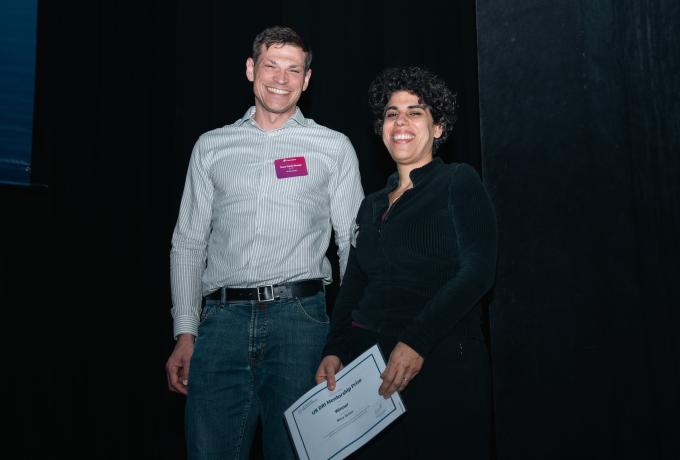
"As her group leader, one of the qualities I value most about Luana is the extraordinary level of trust I can place in her. Whenever a student or junior researcher is assigned to her, I know they will receive thoughtful supervision, rigorous scientific training and consistent support."
Mootaz Salman, Group Leader
"The greatest supporting evidence for Mina’s eFective mentorship is the fact that she continues mentoring alumni and former staF long after they moved on to other posts, whether in industry or academia. She has guided and advised people as they have progressed into leadership and supervision roles, helping them to grow long after they are no longer lab members.
I cannot endorse enough this nomination for the DRI mentorship prize.”
Melissa Grant-Peters, ECR research fellow
Innovation prize
This award recognises and celebrates members of the UK DRI community who have led disruptive contributions in their day-to-day work and environments. The award celebrates “thinking outside of the box” ethos and contributions that have made a substantial difference.
Pierre Parutto (Avezov lab, UK DRI at Cambridge) was the winner of this prize. Pierre developed FidlTrack, an open-access fluorescence imaging tool built to work with standard commercial microscopes and integrated directly into TrackMate, the open-source tracking software most researchers already use, making high-quality single-molecule imaging accessible to any lab, regardless of budget. All code, raw datasets, and custom plasmids are openly available on GitHub, Figshare, and Addgene. Applicable to a wide range of cellular structures, from mitochondrial networks to complex neurites in stem cell-derived neurons, FidlTrack gives researchers across the UK DRI network a standardised, objective tool to study neurodegenerative mechanisms, including aggregate buildup, chaperone dysfunction, and organelle transport deficits, with greater precision than previously possible.
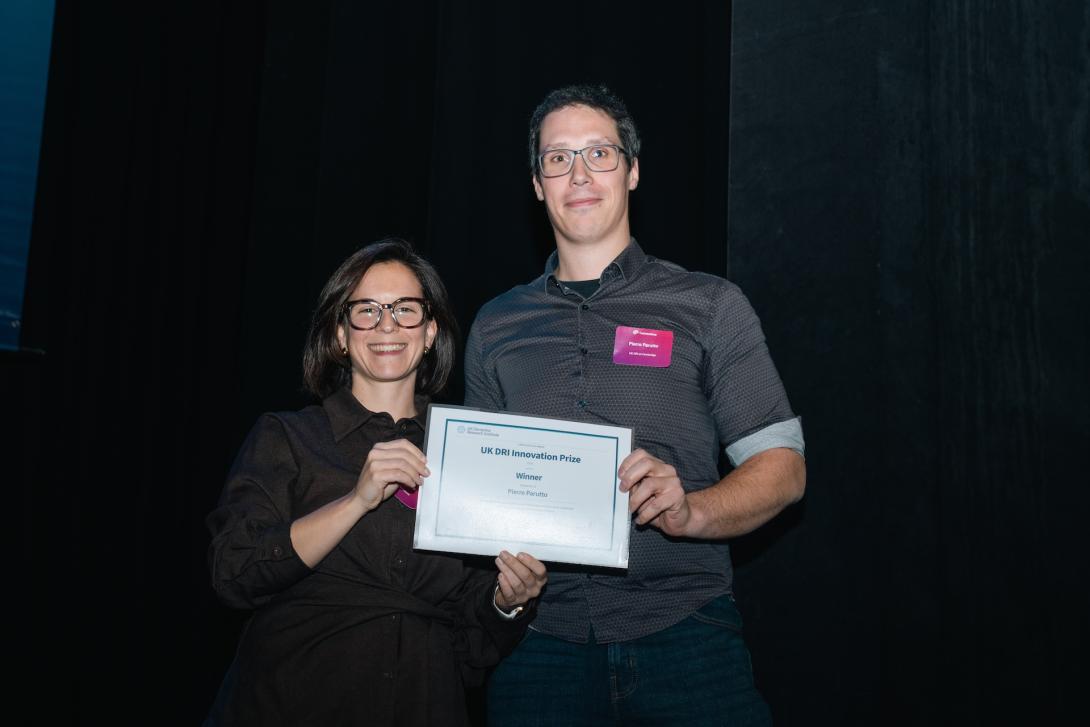
Pierre receiving his award
Aeverie Heuchan PhD Prize
This award recognises and celebrates the outstanding achievements of doctoral researchers whose work has significantly advanced the understanding, diagnosis, treatment, or prevention of dementia and neurodegenerative diseases.
Congratulations to:
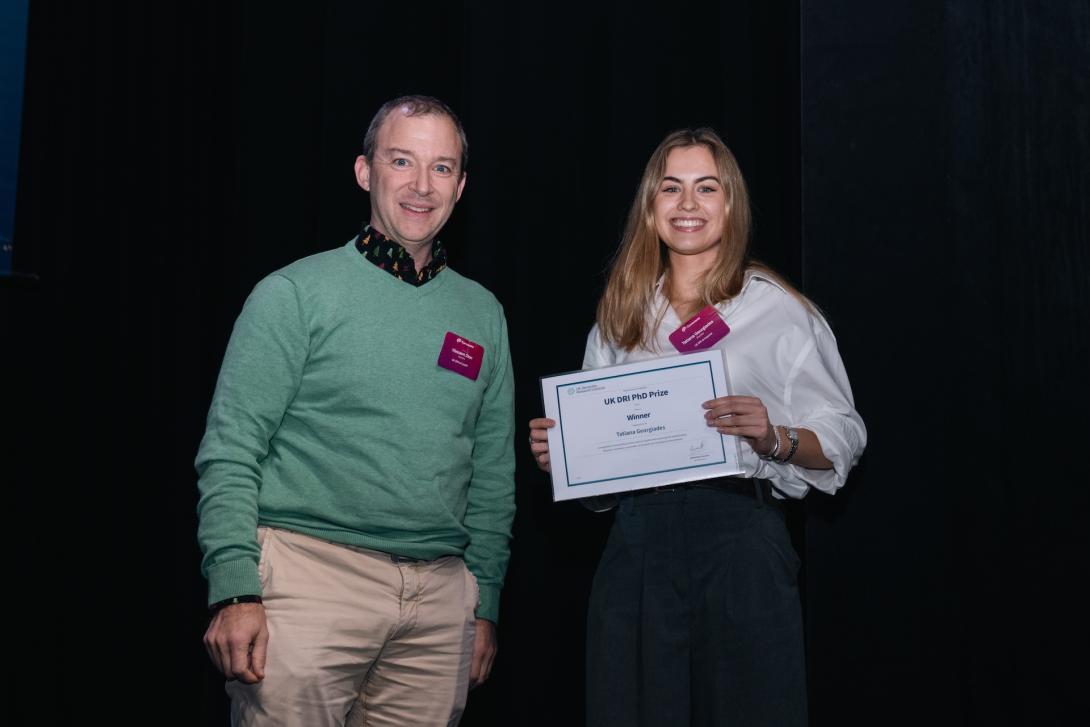
Tatiana recieving her prize
Tatiana Georgiades (Jackson lab, UK DRI at Imperial)
"She is mature, scientifically rigorous and works with great independence. Alongside this, she is always willing to help others in the group, improve our procedures and processes in the lab and provide advice and pilot data to others in the UKDRI centre. Tatiana has shown clear leadership qualities, supervising and training undergraduate and postgraduate students and assisting with a postgraduate teaching workshop on drug discovery in AD."
Johanna Jackson
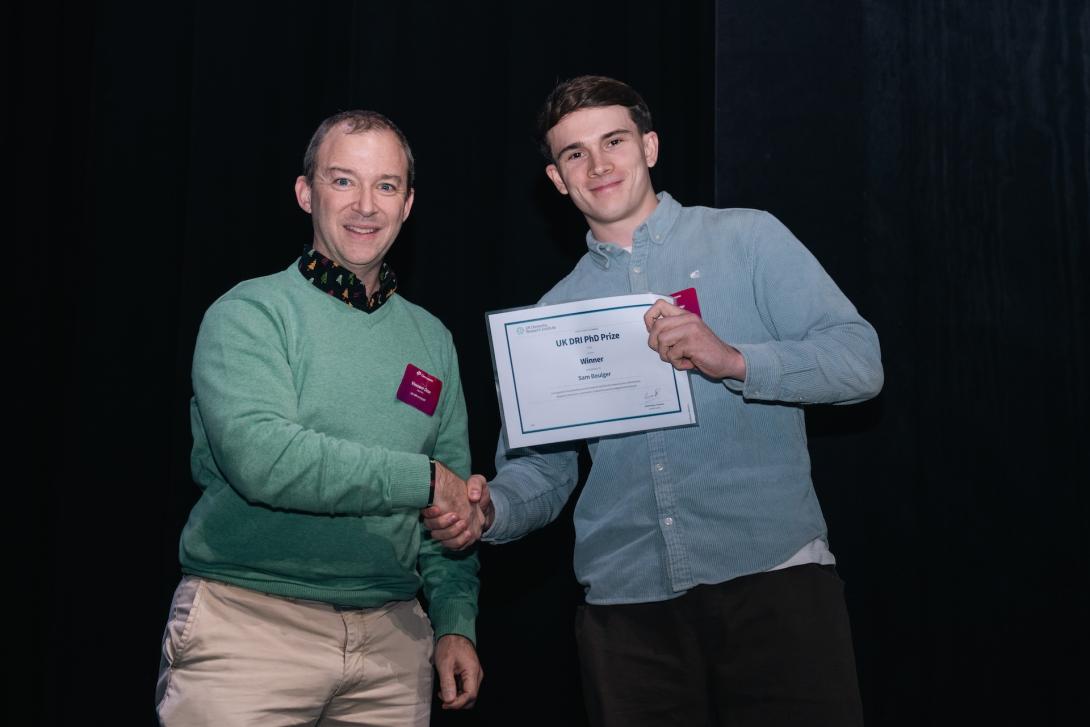
Sam receiving his award
Sam Boulger (Matthews lab, UK DRI at Imperial)
"Sam has delivered research of exceptional quality and significance, demonstrated outstanding leadership and independence, and made meaningful contributions to the broader academic community. He exemplifies the qualities that the UK DRI PhD Prize seeks to recognise and encourage."
Paul M Matthews
Discovery Prize
This award is aimed at early career researchers who have made groundbreaking discoveries in the field of dementia research. The award celebrates innovative and transformative research that has the potential to significantly advance our understanding, diagnosis, treatment, or prevention of dementia and neurodegenerative diseases.
Martha Foiani (Duff lab, UK DRI at UCL), was the winner of the Discovery prize.
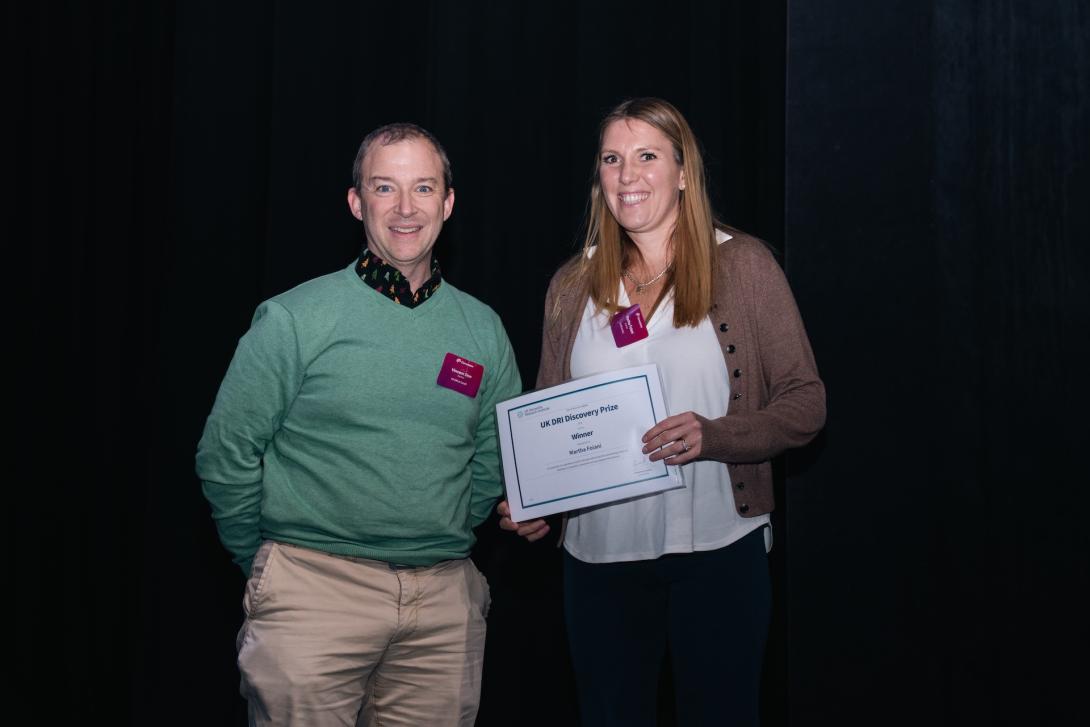
Martha on stage with her award
Reproducibility prize
The Reproducibility in Dementia Research prize promotes open science by developing sustainable and reproducible practices as part of research output.
Congratulations to Guillermo Comesana Cimadevila (Escott-Price lab, UK DRI at Cardiff). developed drugMR, the first open pipeline to combine causal inference with multiple layers of molecular data (blood and brain proteins, and gene expression across tissues and cell types) to prioritise drug targets.
Designed for reproducibility, it runs in version-pinned containers and works on a laptop, HPC cluster, or the cloud, with results explorable through an interactive dashboard accessible to researchers without programming experience. Applying drugMR to Alzheimer’s disease with collaborators at the Alzheimer’s UK Drug Discovery Institute, Guillermo identified 70 protein targets with causal genetic support, five of which had never previously been genetically linked to the disease. Alongside drugMR, he develops and maintains several complementary tools, including nf-core/graft, which identifies shared genomic regions and targets across two diseases, and QuickPWCoCo, a Python implementation of conditional colocalisation. All tools are openly available and documented so that dementia researchers without a dedicated bioinformatics team can reproduce the analyses and apply them to their own data.
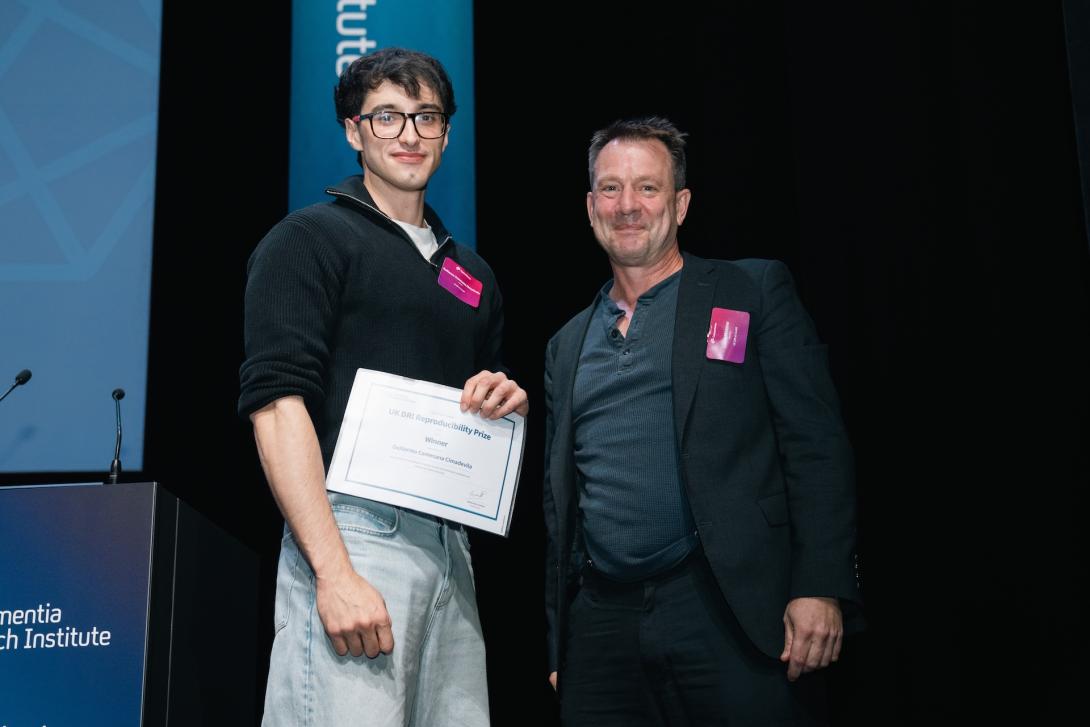
Guillermo receiving his prize
3Rs Prize
The UK DRI 3Rs Prize recognises and rewards contributions to the ‘Replacement, Reduction and Refinement of Animals in Research’ within the Institute.
Congratulations to Marcus Keatinge, Chandran lab, (UK DRI at Edinburgh), who wins the individual prize and the Senior animal technicians from UK DRI at UCL: Hagen Schmidt, Phillip Muckett and Adnan Avdic-Belltheus, who win the team prize.
In my view, Marcus’s work exemplifies what a 3Rs innovation should achieve: it is scientifically enabling, simple, scalable and readily transferable, while simultaneously reducing animal use and refining experimental procedures. It has the potential to change routine practice in zebrafish genetics, replacing invasive genotyping with a rapid visual approach while enabling more ambitious and efficient experimental designs.
Bhuvaneish T Selvaraj
I have worked very closely with each of the techs and know them all to be extremely hardworking, often in difficult circumstances, often out of hours. They are totally dedicated both to the welfare of the animals and to the research that they support. They truly go above and beyond, and I can think of no better way to recognize and reward their dedication than through this award.
Karen Duff
Engagement Prize
The Engagement prize highlights initiatives and activities in public engagement and patient involvement across the Institute. This year, the prize was judged by Sarah Patrick (Public & Patient Involvement & Engagement Consultant) and Mollie Huggins (Race Against Dementia).
This year’s winner was Jade Lucas (Selvaraj lab, UK DRI at Edinburgh). Jade has built a wide-ranging public engagement practice spanning schools, libraries, clinics, and parliament. As a STEM Seedlings Ambassador she has reached more than 250 primary pupils across Edinburgh, and she set up and runs a monthly STEM Club at Newington Library, training colleagues to ensure it continues beyond her own involvement.
At the Anne Rowling Regenerative Neurology Clinic she produced a short film on stem cell research, built around patient and public involvement throughout. She serves as ECR representative for the British Neuropathological Society, running a seminar series for early-career researchers, and has represented UK DRI at a Scottish Parliament reception for the My Name’5 Doddie Foundation. Most recently, she was awarded a competitive Nuffield Foundation POST Fellowship, spending three months as a Science Adviser at the UK Parliament writing a briefing note on rising demand for ADHD and autism assessment and support services.
Science Imaging Prize
The Science Imaging prize showcases eye-catching images from across the UK DRI.
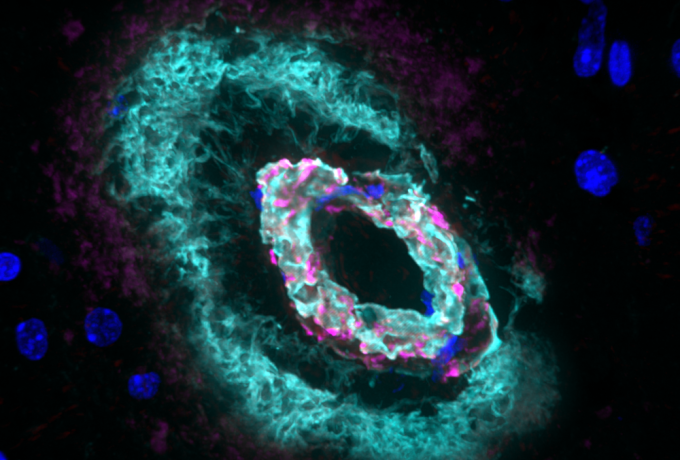
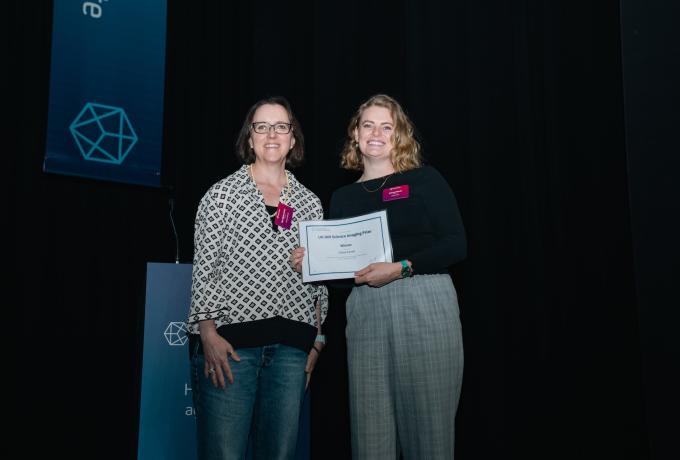
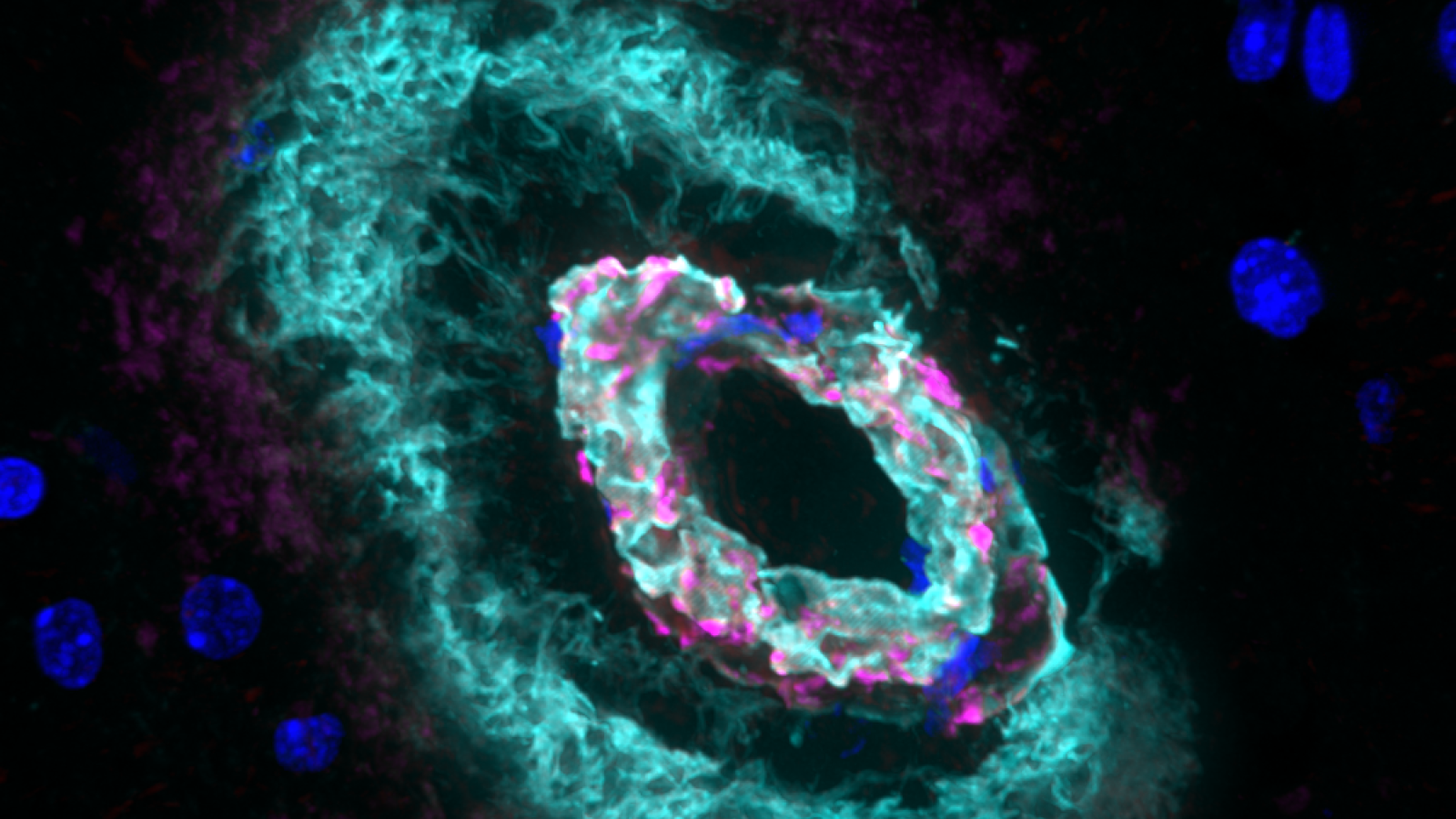
We had some incredible images to work through to decide our shortlist this year, some telling a story of how neurodegenerative disease impacts the brain, others showing how the brain protects itself. Our winner was Cliona Farrell (Salih & Hardy lab, UK DRI at UCL) whose image ‘‘Cerebrovascular Supernova” won the public vote on LinkedIn.