
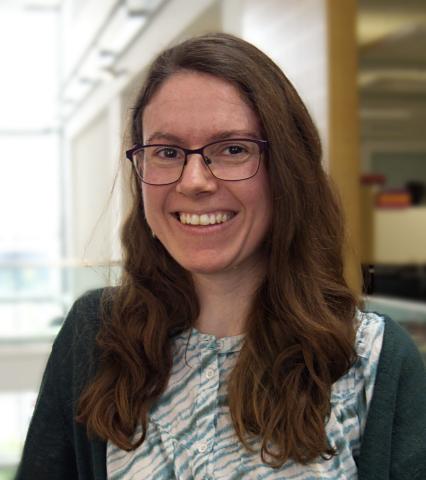
Biography
Dr Hazel Hall-Roberts’ primary interest is in understanding how genetic risk for Alzheimer’s disease manifests as brain cell dysfunction, particularly in microglia.
She completed her PhD at the University of Bath with Professor David Brown and Dr Rob Williams, followed by postdoctoral research at the University of Oxford with Dr Sally Cowley and Dr Emma Mead (Alzheimer’s Research UK (ARUK) Oxford Drug Discovery Institute), where she studied the effects of an AD-associated TREM2 mutation in microglia using human induced pluripotent stem cell (iPSC) models.
Following this, she joined the UK Dementia Research Institute at Cardiff University, where she worked with Professor Julie Williams as a Stem Cell Manager and Research Fellow, managing the iPSC Platform to Model Alzheimer’s Disease Risk (IPMAR). Launched in January 2021, IPMAR is a collaborative project that aimed to generate and characterize one of the largest iPSC resources of individuals with late-onset AD and extremes of polygenic risk, with the goal of identifying the causes of microglial dysfunction.
In 2026, she was awarded an independent ARUK Research Fellowship, to investigate how genetic risk for AD disrupts mitochondria and energy production in microglia, and to determine whether repurposed drugs can restore energy production and improve microglia function. To achieve this, she integrates IPMAR iPSC models with high-content cellular assays and functional genomics.
Research interest
Sporadic Alzheimer's disease (AD) is estimated to be 60-80% heritable. However, this heritability arises from the combined effects of many common genetic variants, collectively referred to as "genetic risk" or "polygenic risk". Genetic studies consistently implicate microglia in AD, but how polygenic risk affects microglial function remains unclear.
My research uses stem cells generated from blood samples donated by people with AD who have a high genetic risk of developing the disease. These stem cells can be converted into brain cells in a dish, providing a powerful model for studying disease mechanisms. I am working to identify which cellular processes are disrupted in these cells, beginning with microglia, the brain's immune cells, as they are strongly implicated in AD. By identifying pathways that can be targeted to restore microglial function, this research lays the foundation for future personalised treatments.