In a new paper, researchers at the UK DRI at Imperial published the first evidence that stimulating the hippocampus – the brain's memory centre – using a special type of non-invasive stimulation helps it grow new neurons. The research is published in Advanced Science.
"Neurodegenerative diseases are complex and can vary greatly from person to person, making them hard to predict and treat. At the same time, the brain has only a limited ability to repair or replace damaged nerve cells on its own. Together, these challenges have made the search for new therapies especially urgent,” explained Dr Nir Grossman, UK DRI Group Leader, Associate Professor in Neuroscience in the Department of Brain Sciences, and the study’s corresponding author.
As Dr Grossman explained, the adult brain has a reservoir of stem cells in a deep structure called the hippocampus, a process called adult hippocampal neurogenesis. The hippocampus is a unique brain structure critical for memory operations.
“It is also one of the regions most vulnerable in the early stages of Alzheimer’s, resulting in impaired memory as well as dysfunctional neurogenesis,” he added.
Non-invasive electrical stimulation
Earlier studies have shown that electrically stimulating neural activity in the hippocampus can boost neurogenesis.
“However, the procedure involves a risky surgical implantation of electrodes deep in the brain (aka deep brain stimulation),” emphasised Dr Grossman. This kind of treatment is too invasive to be used on a wide scale.
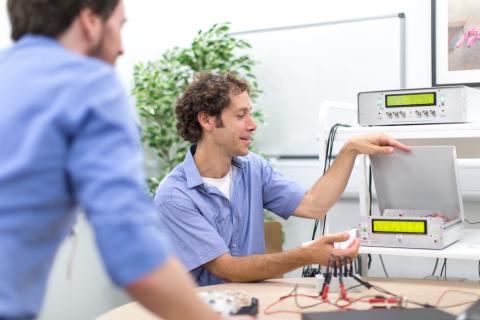
To address this challenge, the researchers developed temporal interference (TI) brain stimulation technology, which allows them to non-invasively modulate the activity of deep brain structures electrically.
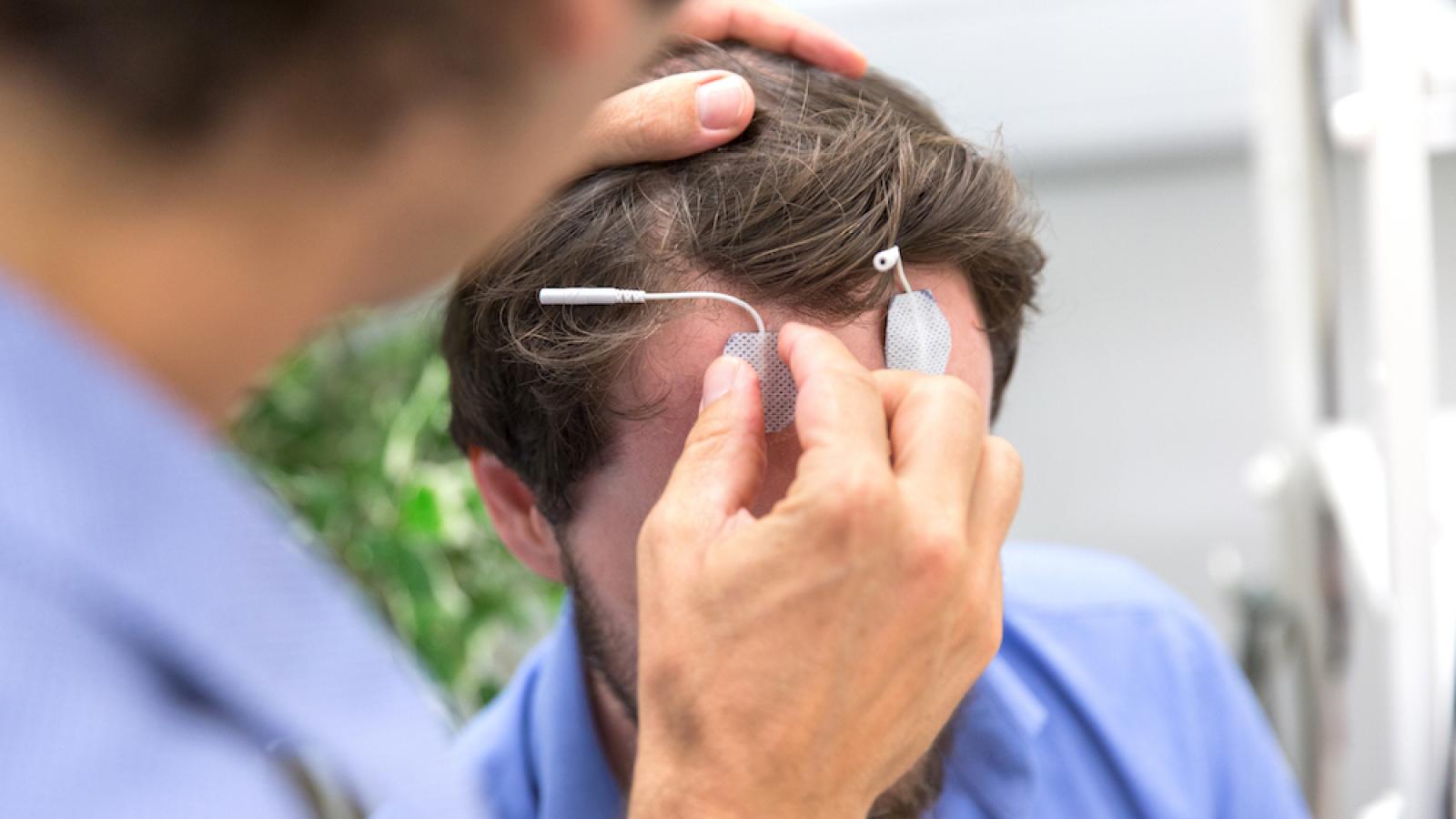
TI works by delivering two high-frequency electric fields through electrodes placed on the scalp. Each field on its own is too fast for neurons to respond to, so the currents pass harmlessly through the outer brain. But because the two fields are tuned to slightly different frequencies, the point where they overlap in the brain carries a slower rhythm that neurons can follow.
By adjusting the currents, the researchers can steer this active spot onto a precise target, such as the hippocampus, while leaving the overlying cortex untouched.
The team reported the validation in animals in 2017 (in Cell) and, six years later, in humans in 2023 (in Nature Neuroscience), showing that TI stimulation can focally modulate hippocampal activity and enhance the accuracy of episodic memories in healthy people.
The impact
In their 2026 study, they showed for the first time that this approach can prompt the brain to regenerate.
Using TI stimulation tuned to a specific frequency (the brain's natural theta rhythm), the team boosted the birth and maturation of new neurons in the hippocampus of a mouse model of Alzheimer's disease, without any drugs, genetic engineering or surgery.
“We showed that TI stimulation can non-invasively modulate neural activity in the hippocampus and improve its memory function. At the UK DRI, we are developing the TI brain stimulation technology as a therapy for Alzheimer's.
“Although the work is still at a preclinical stage, it highlights the potential of our non-invasive intervention to augment the brain's natural resilience to the devastating loss of neural cells in neurodegenerative diseases such as Alzheimer's disease," said Dr Nir Grossman.
The team is currently conducting clinical studies in people with Alzheimer's disease, which so far have proven to be safe and well-tolerated.
Source: Imperial College London
Reference: S. Peressotti, M. Garcia Garrido, P. Dzialecka, et al. “Temporal Interference Stimulation Enhances Neural Regeneration.” Advanced Science (2026): e24341. https://doi.org/10.1002/advs.202524341