
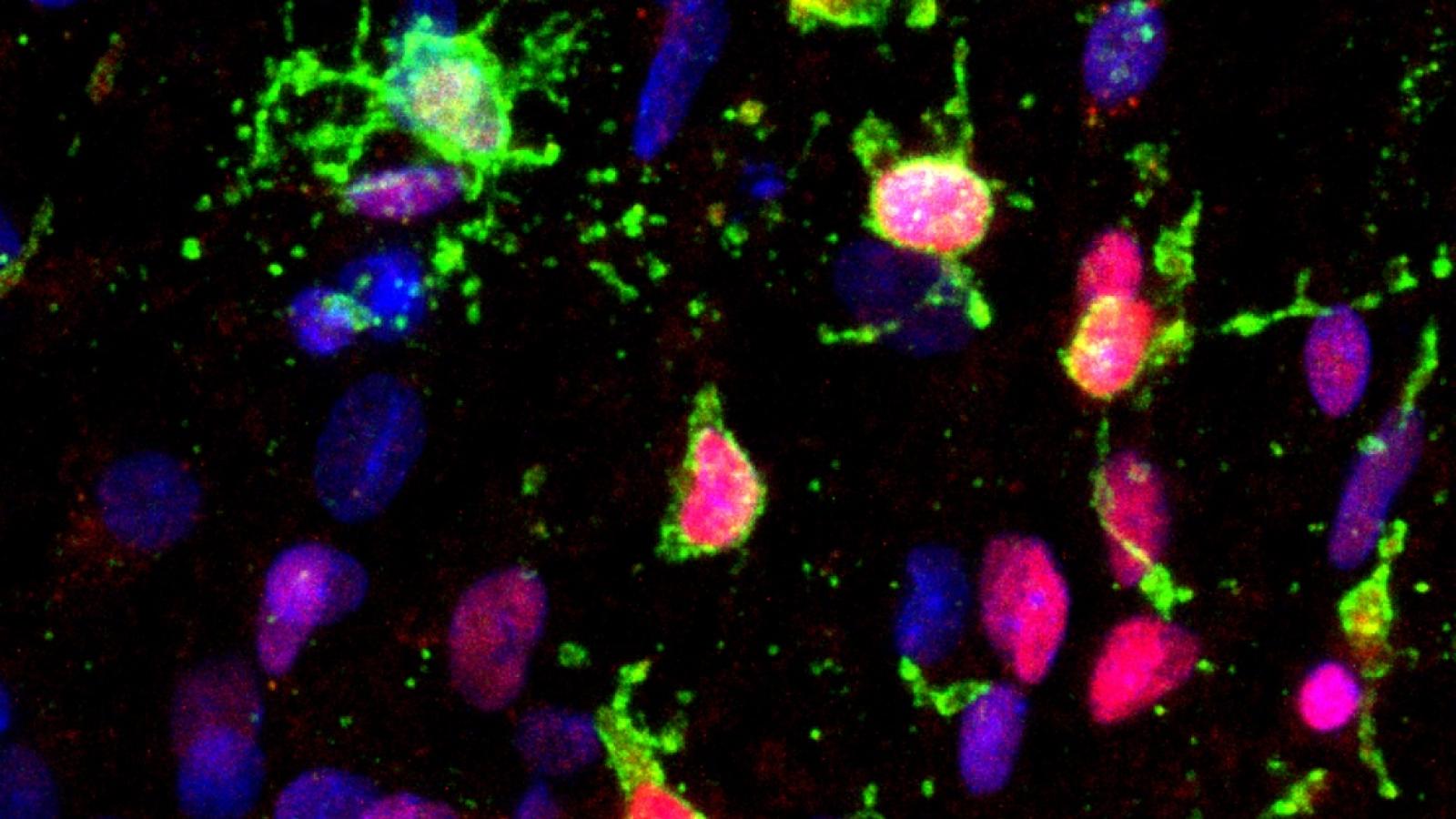
Oligodendrocytes are a type of support cell in the brain. They produce the insulating layer, known as myelin, that helps neurons transmit electrical signals. We know that early on in Alzheimer’s, myelin is lost – but why, and how this occurs, is not yet understood. In a major new project, Dr Sarah Marzi (UK DRI at King’s), Dr Dervis Salih (UK DRI at UCL), Dr Alexi Nott (UK DRI at Imperial) and Dr Rikesh Rajani (BHF-UK DRI Centre for Vascular Dementia Research) aim to address these questions.
In the new study, the scientists will look at gene regulation and gene expression in oligodendrocytes, to investigate the mechanisms by which these cells influence neurodegeneration.
Dr Marzi explained:
“The role of oligodendrocytes in Alzheimer’s disease is still underappreciated and understudied. Our study could open up a new class of cells that might be targeted in Alzheimer’s to improve symptoms and outcomes for people affected by the condition.”
This project is funded via stage II of the UK DRI Key Questions Catalytic Funding Programme, designed to leverage the unique strengths and capabilities of our Institute to deliver bold and ambitious research. The scheme was launched in 2024, when eight projects were given pump-priming funding of up to £150K for one year. For this second stage, with up to £1M available for up to three years, an independent international expert review panel recommended moving forward with two of those projects.
In stage I of their project, Dr Marzi and team showed that widespread changes in gene regulation occur in oligodendrocytes in Alzheimer’s. In particular, the way their communication with neurons and microglia – the brain’s resident immune cells – changes in ageing and disease. The scientists were able to link these changes to different pathways and networks, highlighting a role for oligodendrocytes in modulating neuronal and microglial function in disease.
Dr Marzi said:
“In the second stage, we’re digging into communication between these cell types to figure out how they are changing in disease. We’re also looking at people who have particularly resilient brains and remain cognitively healthy into the very late stages of their lives, as our findings indicate that epigenetic changes in oligodendrocytes may contribute to cognitive resilience, as well as Alzheimer’s.”
The team bring wide ranging and complementary expertise from across the UK DRI: Dr Marzi and Dr Nott are experts in epigenetics, Dr Rajani brings expertise in oligodendrocyte modelling, and Dr Salih in genetics and factors influencing cognitive function during ageing and neurodegeneration. The researchers hope their work will identify gene networks in oligodendrocytes that are impacted by age, disease, and contribute to cognitive resilience – and that the findings could lead to new drug targets for Alzheimer’s.
Dr Marzi concluded:
“We are very excited to be funded by the key questions programme, following-up on preliminary findings to investigate how cross-talk between oligodendrocytes and other cells changes in ageing and disease, and what we may be able to do to promote sustained oligodendrocyte health as seen in cognitively resilient agers, who live long lives without developing dementia.”
The second project funded by the UK DRI Key Questions Catalytic Funding Programme will be announced in the coming weeks.
Find out more about this Key Questions project.
Banner image: Human oligodendrocytes grown in a dish (green). Credit: Rikesh Rajani