

In this blog, UK DRI Science Portfolio Manager Dr Chris Ugbode shares his reflections on the recent Alzheimer's Association International Conference.
This year’s Alzheimer’s Association International Conference (AAIC), held in London, had the feel of a field in transition - less about chasing single breakthroughs, more about working out how discovery, diagnosis, treatment and care actually fit together.
There was a clear sense that dementia research is moving beyond single targets and single technologies towards a more integrated model of earlier detection, better stratification, multimodal biomarkers and more inclusive trials.
Across the sessions and the corridors, the same question kept resurfacing in different forms: we can detect Alzheimer's earlier and treat it more precisely than ever before, so what does that mean for the person sitting in the clinic?
Amyloid and Tau: Still centre stage, but more grounded
Amyloid and tau therapeutics remained the backbone of the scientific programme, but the tone around them has matured.
The standout moment was the presentation of detailed Phase 2 data for diranersen (BIIB080), Biogen and Ionis' tau-targeting antisense oligonucleotide. The room was full for this one, and for good reason: it showed robust tau reduction alongside signals of clinical benefit in early Alzheimer's disease. Given how many tau programmes have failed to carry their Phase 2 promise into Phase 3, and following Posdinemab's disappointing data earlier this year, diranersen has handed the tau field something it badly needed - a reason for renewed confidence, tempered by the knowledge that the real test is still ahead.
The anti-amyloid picture has continued to evolve too. Lecanemab was everywhere, not just in efficacy data but in the practicalities of delivering it - real-world experience and a strong push toward subcutaneous administration. Eisai devoted a session to at-home subcutaneous dosing, and the FDA's approval of a subcutaneous starter dose landed in the same week, a reminder of how fast delivery models are moving, alongside the science itself. Donanemab held its ground too, with new work on modified titration strategies aimed at cutting ARIA risk without sacrificing amyloid and plasma p-tau217 reduction. There was also intriguing evidence that amyloid clearance may reduce astrogliosis, measured via GFAP - a hint that these drug effects may reach further into brain biology than the headline mechanism suggests.
Beyond the trial endpoint: Does it matter day to day?
What stood out most, though, was a shift in the conversation itself. Fewer talks leaned on clinical scales like CDR-SB as the final word. More asked the harder question underneath: is there a meaningful, day-to-day difference for the person living with the condition?
This is not an academic point. It is precisely the calculation NICE now has to make - weighing genuine but modest slowing of decline against cost, access, and the burden these treatments place on patients, carers and health systems. Minimal Clinically Important Difference, or MCID, came up again and again, and the honest consensus in the room was sobering: these therapies slow decline, but by margins that mostly fall short of what patients would notice as meaningful.
That is not a reason for pessimism. It is a reason for clarity. The field is excited about disease modification, but it is no longer naïve about the distance between a biologically meaningful effect and a life meaningfully changed.
As an institute, our job is to hold both of those truths at once - taking the trial data seriously while reading it alongside what real-world use is actually showing us.
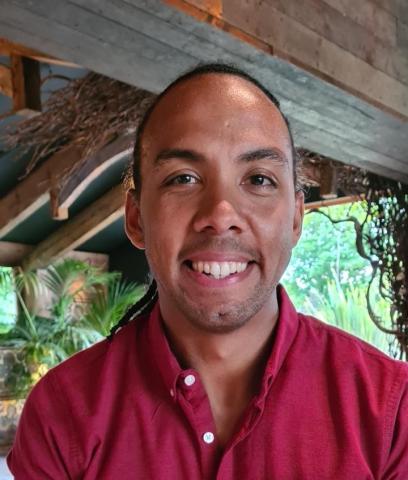
As an institute, our job is to hold both of those truths at once - taking the trial data seriously while reading it alongside what real-world use is actually showing us.
Hot topics: combination therapy and early intervention
If there was one idea that ran under almost everything else at this year's meeting, it was this: Alzheimer's is not going to be solved by hitting one target. Session after session explored futures where amyloid- and tau-directed therapies are combined with each other, or paired with drugs targeting neuroinflammation, vascular dysfunction, metabolic dysfunction or synaptic resilience. The enthusiasm for tau therapeutics didn't exist in isolation - it sat inside a much broader recognition that the disease is driven by interacting pathways, and that treating it will eventually mean treating several of them together.
The second big theme was timing - specifically, how much earlier we might now be able to intervene. Blood-based biomarkers have moved from promising research tools to genuine clinical instruments, and they were everywhere, as diagnostics, as screening tools, as ways to enrich trial recruitment. Data presented at AAIC showed blood biomarkers improving diagnostic accuracy in real-world settings, including primary care, and p-tau217 emerging as a potential predictor of cognitive decline years before symptoms appear. Roche's PrevenTRON study, which uses plasma p-tau217 to identify cognitively unimpaired people at high risk of progression, is a good example of where this is heading - prevention trials built around biomarker-defined risk rather than symptom onset. There was also strong interest in newer tau biomarkers, particularly the microtubule-binding region (MTBR), which may sharpen diagnostic accuracy further still.
There's a useful analogy here with cardiovascular medicine: stratify risk, track trajectories, intervene early, measure change over time. But the analogy also raises difficult questions. Who should be tested? At what point does knowing your risk help rather than harm? How do we make sure testing and follow-up are available equitably, not just to those already engaged with specialist care? And, perhaps most pressingly, what do we actually do for someone who has amyloid and tau pathology but no measurable cognitive decline?
The data behind the data
None of this earlier detection is possible without the work happening in proteomics and multimodal biomarker discovery, and this was one of the most active strands of the conference. Across talks and posters, there was intense interest in identifying the next generation of CSF and blood biomarkers, increasingly using machine learning to make sense of biological signatures too complex to interpret by eye. Sessions on multimodal analytics, electronic health records and large-scale data platforms made clear just how central informatics has become - dementia research now depends on the ability to bring together molecular, imaging, clinical, digital and real-world data, and getting that infrastructure right is as important as any single biomarker discovery.
Why the brain itself still matters
Amid all the talk of blood tests and drug delivery, there was a welcome amount of space given to human neuropathology. Talks exploring areas such as the locus coeruleus, co-pathologies and regional vulnerability were a good reminder that no amount of biomarker sophistication replaces the need to understand what is actually happening in the brain - when it happens, and why some people decline faster than others. Recent work mapping the progression of Parkinson's and the spread of Lewy body pathology is helping sharpen the picture too, making it easier to distinguish pathology that is distinctly Alzheimer's from that which belongs to Parkinson's or frontotemporal dementia.
Where the field still has room to grow
Some areas felt underrepresented. In particular, non-neuronal biology did not seem to get the airtime it deserves. There were sessions on glial biology, including astrocytes in the context of tau, but relatively little on astrocytes, oligodendrocytes and other non-neuronal cell types as central drivers of disease rather than bystanders. Given how strongly genetics and mechanistic biology now point toward microglia, immune signalling and broader cell–cell interactions, this feels like an area where conferences - and the field more broadly - still has real ground to cover.
UK DRI at AAIC
UK DRI science had a strong presence this year. Researchers at all levels from across the institute presented posters on a wide range of topics, from fundamental neurobiology to risk and prevention. UK DRI researchers gave talks throughout the event, including Dr Soyon Hong (UK DRI at UCL), who discussed her recent work uncovering a new link between brain activity, peripheral immunity, and synapse loss. Dr Wioleta Zelek (UK DRI at Cardiff) presented her research into anti-complement therapies for neurodegenerative disease, and Prof Jonathan Schott (UK DRI at UCL) who presented his work validating biomarkers in British birth cohorts.
Work from our Centre for Care Research & Technology, including the Minder platform, featured prominently in public-facing coverage during the conference - a good illustration of how home monitoring and smart technology can help people with dementia live more safely and independently for longer. Separately, research from Dave Sharp's group at CR&T on brain health in retired professional footballers drew major media attention, with coverage from the BBC, CNN and others. The study reported structural brain differences and higher rates of depression and anxiety symptoms in former elite footballers compared with controls, though it did not find significant differences in objective cognitive testing at this stage.
Work like this matters beyond its immediate findings. It connects dementia research to lived experience, sport, injury prevention, mental health and public policy. It is also a good demonstration of what UK DRI is built to do: bring discovery science, clinical research, data-driven monitoring and care-focused innovation together under one roof, rather than treating them as separate conversations.
The mission ahead
Taken as a whole, AAIC this year showed a field growing into a more complete view of brain health, rather than narrowing further into pathology alone. Earlier diagnosis is becoming genuinely achievable. Current amyloid and tau therapies, for all their limitations, have moved the needle on cognitive decline - not as far as any of us would like, but far enough to justify real hope that decline can eventually be slowed, and one day stopped.
For UK DRI, that is the whole point of the mission: discover new mechanisms, develop new diagnostics and therapies, and get them to patients as fast as we responsibly can. Our strength lies in doing that across every stage of physiology and pathology at once - not picking one piece of the puzzle, but holding the whole picture, in service of healthy brain ageing for all.