
Search
Main content
Tom Massey

Dr Tom Massey

Group Leader

Using recent genetic discoveries to develop new drug targets for Huntington's disease

Techniques

Advanced microscopy & imaging, CRISPR, Drug screening, Genomics, Next generation sequencing, Stem cells / iPSCs

News

Key publications

Nat Neurosci
Published
Exome sequencing of individuals with Huntington's disease implicates FAN1 nuclease activity in slowing CAG expansion and disease onset.
Authors
Branduff McAllister, Jasmine Donaldson, Caroline S Binda, Sophie Powell, Uroosa Chughtai, Gareth Edwards, Joseph Stone, Sergey Lobanov, Linda Elliston, Laura-Nadine Schuhmacher, Elliott Rees, Georgina Menzies, Marc Ciosi, Alastair Maxwell, Michael J Chao, Eun Pyo Hong, Diane Lucente, Vanessa Wheeler, Jong-Min Lee, Marcy E MacDonald, Jeffrey D Long, Elizabeth H Aylward, G Bernhard Landwehrmeyer, Anne E Rosser, Jane S Paulsen, Nigel M Williams, James F Gusella, Darren G Monckton, Nicholas D Allen, Peter Holmans, Lesley Jones, Thomas H Massey
Exome sequencing of individuals with Huntington's disease implicates FAN1 nuclease activity in slowing CAG expansion and disease onset.

Biography

Dr Tom Massey is a clinical academic Neurologist, whose research focuses on genetic modifiers and therapeutic targets for Huntington’s disease (HD). Dr Massey studied Biochemistry at Cambridge University, before completing his PhD at Oxford in mechanisms of DNA repair. He then trained in Medicine at Oxford University, before beginning a Welsh Clinical Academic Training Fellowship in Neurology in 2013. He was awarded a Clinical Research Training Fellowship from the MRC to develop a programme of research into genetic modifiers of HD. In 2021, he completed his neurology training and became a Consultant Neurologist, and was then award an MRC Clinician Scientist Fellowship to further develop his work on genetic modifiers and therapeutic targets for HD. Dr Massey joined the UK DRI in Cardiff as a Group Leader in 2023. 

Massey Lab

Explore the work of the Massey lab, focused on identifying new drug targets for Huntington's disease. 
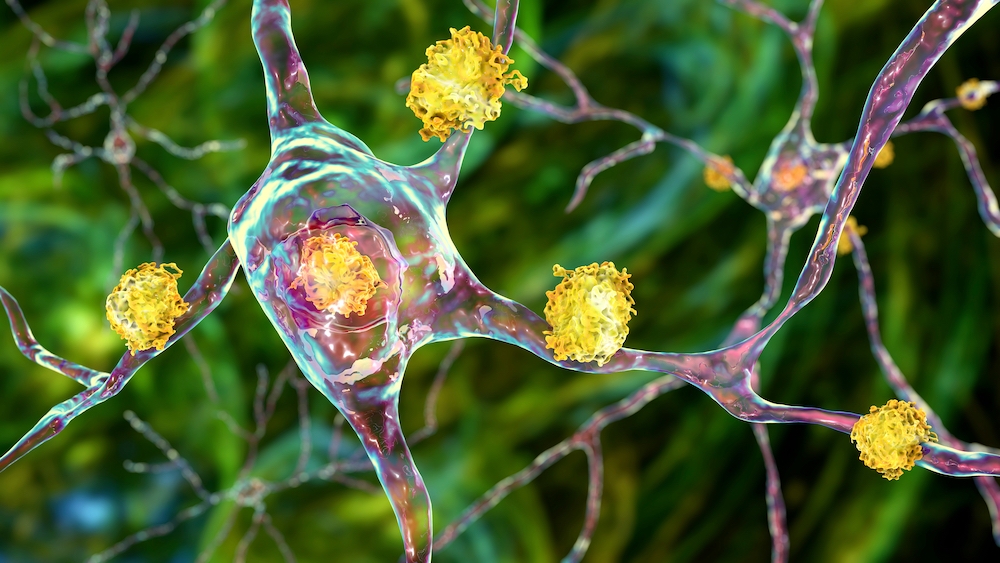
Image showing neuron degeneration in Huntington's disease