Search
Main content
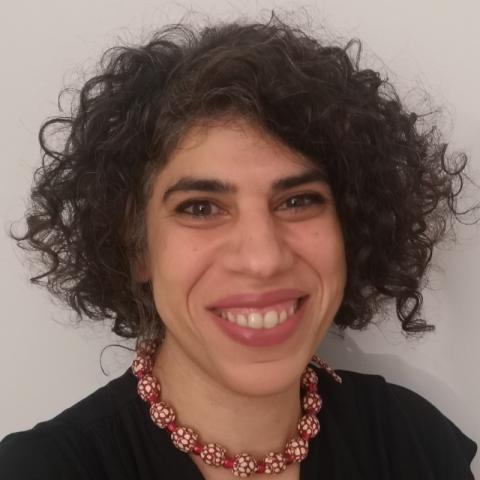
Mina Ryten

Prof Mina Ryten

(MD, PhD, (she/her))

Centre Director

Leveraging brain transcriptomics to understand the pathophysiology of Lewy body diseases

Techniques

Bioinformatics, Epigenomics, Genomics, Single cell / nucleus transcriptomics, Software development, Spatial transcriptomics

Biography

Prof Mina Ryten is a clinician scientist with a long-standing interest in the use of human brain transcriptomics to understand neurological diseases. Mina began her medical training in Cambridge University and went on to complete an MBPhD at UCL. While her PhD focused on purinergic signalling in skeletal muscle development, she subsequently trained in bioinformatics through an MRC Post-doctoral Fellowship in Systems Biology. This experience led her to become a Clinical Geneticist, shaped her research interests and formed the basis of her application for an MRC Clinician Scientist Fellowship. Since 2017 Mina has led her own research group at the UCL Institute of Neurology, and later the UCL Institute of Child Health. In January 2024 Mina’s lab moved to Cambridge University, where she also became the Director of the UK DRI at Cambridge. At the core of her group’s research is the use of human brain transcriptomic data as a genome-wide functional read-out of an individual’s DNA – a read-out which can inform our understanding of the genetic origins of neurodegenerative diseases. For rare neurogenetic diseases this has meant using correlations in transcriptomic data to identify hidden gene-gene relationships amongst Mendelian genes. In the context of complex neurological diseases, Mina has generated and used regulatory data across the human brain to link disease risk positions to specific genes. Thus, over the last ten years, she has developed extensive expertise in the generation and use of human brain transcriptomic data with a specific focus on neurodegenerative diseases and particularly Lewy body disorders.

News
Key publications

Movement disorders : official journal of the Movement Disorder Society
Published
Identification of GGC Repeat Expansions in ZFHX3 among Chilean Movement Disorder Patients
Authors
Paula Saffie-Awad, Abraham Moller, Kensuke Daida, Pilar Alvarez Jerez, Zhongbo Chen, Zachary B Anderson, Mariam Isayan, Kimberly Paquette, Sophia B Gibson, Madison Fulcher, Abigail Miano-Burkhardt, Laksh Malik, Breeana Baker, Paige Jarreau, Henry Houlden, Mina Ryten, Bida Gu, Mark J P Chaisson, Danny E Miller, Pedro Chaná-Cuevas, Cornelis Blauwendraat, Andrew B Singleton, Kimberley J Billingsley
Identification of GGC Repeat Expansions in ZFHX3 among Chilean Movement Disorder Patients
Science advances
Published
Astrocytic RNA editing regulates the host immune response to alpha-synuclein
Authors
Karishma D'Sa, Minee L Choi, Aaron Z Wagen, Núria Setó-Salvia, Olga Kopach, James R Evans, Margarida Rodrigues, Patricia Lopez-Garcia, Joanne Lachica, Benjamin E Clarke, Jaijeet Singh, Ali Ghareeb, James Bayne, Melissa Grant-Peters, Sonia Garcia-Ruiz, Zhongbo Chen, Samuel Rodriques, Dilan Athauda, Emil K Gustavsson, Sarah A Gagliano Taliun, Christina Toomey, Regina H Reynolds, George Young, Stephanie Strohbuecker, Thomas Warner, Dmitri A Rusakov, Rickie Patani, Clare Bryant, David A Klenerman, Sonia Gandhi, Mina Ryten
Astrocytic RNA editing regulates the host immune response to alpha-synuclein
medRxiv : the preprint server for health sciences
Published
Identification of GGC Repeat Expansions in <em>ZFHX3</em> Among Chilean Movement Disorder Patients
Authors
Paula Saffie-Awad, Abraham Moller, Kensuke Daida, Pilar Alvarez Jerez, Zhongbo Chen, Zachary B Anderson, Mariam Isayan, Kimberly Paquette, Sophia B Gibson, Madison Fulcher, Abigail Miano-Burkhardt, Laksh Malik, Breeana Baker, Paige Jarreau, Henry Houlden, Mina Ryten, Bida Gu, Mark Jp Chaisson, Danny E Miller, Pedro Chaná-Cuevas, Cornelis Blauwendraat, Andrew B Singleton, Kimberley J Billingsley
Identification of GGC Repeat Expansions in <em>ZFHX3</em> Among Chilean Movement Disorder Patients

Ryten Lab

Explore the work of the Ryten Lab, leveraging brain transcriptomics to understand the pathophysiology of Lewy body diseases