Search
Main content
Paul Matthews

Prof Paul Matthews

OBE, DPhil, MD, FRCP, FMedSci ((he/him))

Group Leader

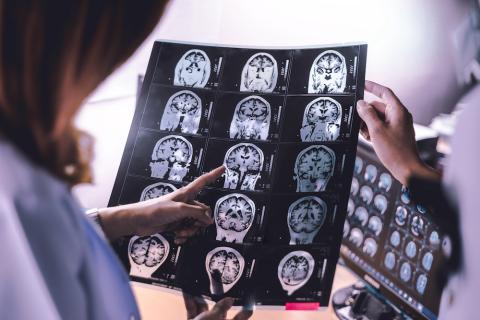
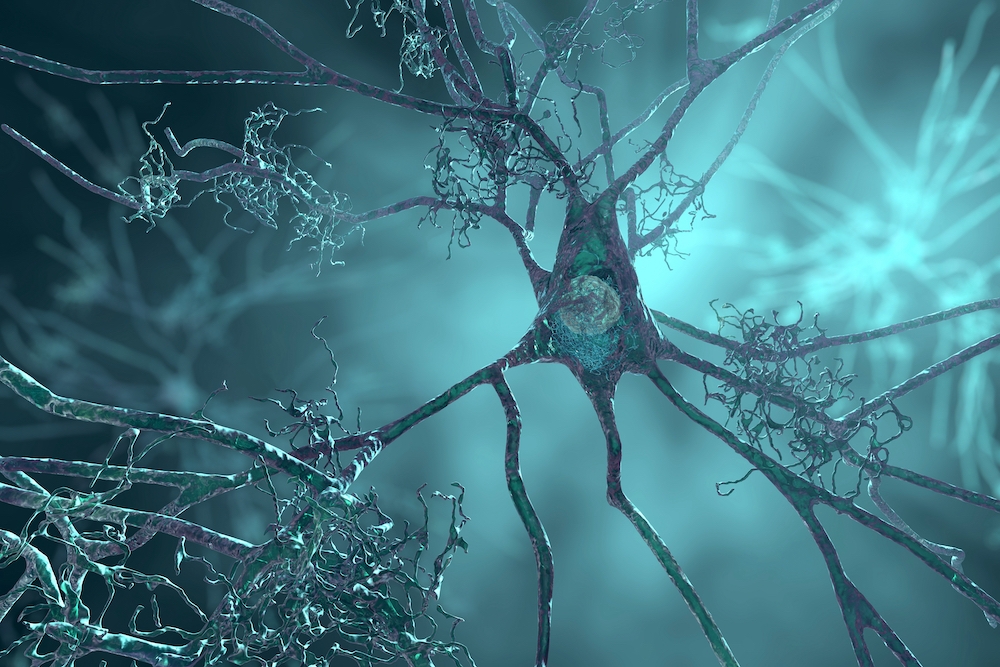
Exploring neuronal vulnerability and genetic risk variants in Alzheimer’s progression

Techniques

Advanced spectroscopy, Bioinformatics, Biophysical techniques, Experimental medicine, Human brain imaging, Lipidomics, Single cell / nucleus transcriptomics, Statistical modelling, Stem cells / iPSCs

Biography

Paul is a neurologist with a research focus on neuroinflammatory mechanisms of neurodegeneration in Alzheimer’s disease (AD) and multiple sclerosis.

He read chemistry as an undergraduate in Oxford, completed his DPhil there in the biochemistry laboratory of Prof. Sir George Radda, then obtained an MD and was an intern in medicine at Stanford University with a part-time post-doctoral period in the Department of Pharmacology before moving to the Montreal Neurological Institute (MNI) for a Residency in Neurology. Following this, he spent a further three post-doctoral years in the Genetics Laboratory in Oxford before becoming an Assistant Professor of Neurology and Genetics at McGill University. He returned to Oxford in 1995 as an MRC Clinical Research Reader (later Professor) where he was the founding Director of Oxford’s Centre for Functional Magnetic Resonance Imaging of the Brain (FMRIB). From 2005, he became a Vice President in GlaxoSmithKline, holding a variety of senior portfolios, including those for the GSK Clinical Imaging Centre and, later, the Global Imaging Group. He was Chair of the UKRI MRC Neuroscience and Mental Health Board 2020-24.

Paul is a Fellow of the Academy of Medical Sciences, a Fellow by Special Election of St Edmund Hall, Oxford and a Fellow of the Academia Europea. He was made an Officer of the Most Excellent Order of the British Empire (OBE) in 2008 for services to Neuroscience.  
News

Key publications

Nature
Published
Somatic mosaicism reveals clonal distributions of neocortical development.
Authors
Martin W Breuss, Xiaoxu Yang, Johannes C M Schlachetzki, Danny Antaki, Addison J Lana, Xin Xu, Changuk Chung, Guoliang Chai, Valentina Stanley, Qiong Song, Traci F Newmeyer, An Nguyen, Sydney O'Brien, Marten A Hoeksema, Beibei Cao, Alexi Nott, Jennifer McEvoy-Venneri, Martina P Pasillas, Scott T Barton, Brett R Copeland, Shareef Nahas, Lucitia Van Der Kraan, Yan Ding, , Christopher K Glass, Joseph G Gleeson
Somatic mosaicism reveals clonal distributions of neocortical development.
J Clin Invest
Published
Truncated stathmin-2 is a marker of TDP-43 pathology in frontotemporal dementia.
Authors
Mercedes Prudencio, Jack Humphrey, Sarah Pickles, Anna-Leigh Brown, Sarah E Hill, Jennifer M Kachergus, J Shi, Michael G Heckman, Matthew R Spiegel, Casey Cook, Yuping Song, Mei Yue, Lillian M Daughrity, Yari Carlomagno, Karen Jansen-West, Cristhoper Fernandez de Castro, Michael DeTure, Shunsuke Koga, Ying-Chih Wang, Prasanth Sivakumar, Cristian Bodo, Ana Candalija, Kevin Talbot, Bhuvaneish T Selvaraj, Karen Burr, Siddharthan Chandran, Jia Newcombe, Tammaryn Lashley, Isabel Hubbard, Demetra Catalano, Duyang Kim, Nadia Propp, Samantha Fennessey, , Delphine Fagegaltier, Hemali Phatnani, Maria Secrier, Elizabeth Mc Fisher, Björn Oskarsson, Marka van Blitterswijk, Rosa Rademakers, Neil R Graff-Radford, Bradley F Boeve, David S Knopman, Ronald C Petersen, Keith A Josephs, E Aubrey Thompson, Towfique Raj, Michael Ward, Dennis W Dickson, Tania F Gendron, Pietro Fratta, Leonard Petrucelli
Truncated stathmin-2 is a marker of TDP-43 pathology in frontotemporal dementia.

Matthews Lab

Explore the work of the Matthews Lab focused on neuronal vulnerability and genetic risk variants in the progression of Alzheimer’s disease.