
Huntington’s disease is a fatal neurodegenerative condition caused by repetitive expansion of three DNA blocks (C, A and G) in the huntingtin gene. Recent studies have highlighted the role of DNA repair pathways in influencing the age of onset and disease progression. Despite growing insight into the role of these pathways, translating this knowledge into therapies continues to be a challenge, hindered by the lack of robust tools. In a major new project, Prof Gabriel Balmus (UK DRI at Cambridge) and Prof Sarah Tabrizi (UK DRI at UCL) aim to selectively target DNA repair pathways, to develop disease modifying therapies for Huntington’s.
This project is funded via stage II of the UK DRI Key Questions Catalytic Funding Programme, designed to leverage the unique strengths and capabilities of our Institute to deliver bold and ambitious research. The scheme was launched in 2024, when eight projects were given pump-priming funding of up to £150K for one year. For this second stage, with up to £1M available for up to three years, an independent international expert review panel recommended moving forward with two of those projects.
Gene therapy approaches have demonstrated that targeting specific DNA repair pathways in Huntington’s is feasible, but barriers include invasiveness, manufacturing cost, and difficulty delivering to the brain. Small molecule drugs are cheaper to produce and typically administered orally, offering a scalable and accessible alternative. However, designing small molecules that selectively target the desired compounds and spare others presents its own challenges.
In stage I of their project, Profs Balmus and Tabrizi collaborated with the ALBORADA Drug Discovery Institute in Cambridge and Prof Britt Adamson (Princeton Uni) to develop a screening platform aiming to identify candidate small molecules that could selectively target the DNA repair pathway. The team successfully developed a tool capable of analysing a high volume of samples quickly.
For people living with Huntington's disease, there is an urgent need for treatments that are not only effective but also practical and accessible. Small molecule drugs offer a compelling route forward: they can be taken as a pill, produced affordably at scale, and reach the brain more readily than gene therapies. They also have the potential to reach patients globally, including in parts of the world where gene therapy may never be feasible.
Group Leader
Their stage II plan builds on this work, aiming to discover small molecule inhibitors that selectively target a specific DNA repair pathway, thereby stopping CAG repeat expansion.
Prof Balmus added:
“The challenge has been finding ways to selectively target the DNA repair pathways driving CAG repeat expansion without disrupting selected functions elsewhere. With the screening platform we developed in stage I with the help of Britt Adamson at Princeton, US, we now have the tools to identify small molecules that can do exactly that. Crucially, we have the right team to make this work combining my expertise in the molecular biology of DNA repair with John Skidmore's deep experience in drug discovery and Sarah Tabrizi's clinical insight into what patients actually need. Our goal in this next phase is to move from promising compounds to a therapy that could genuinely change lives."
Find out about the second Key Questions project funded through this programme, led by Dr Sarah Marzi (UK DRI at King's).
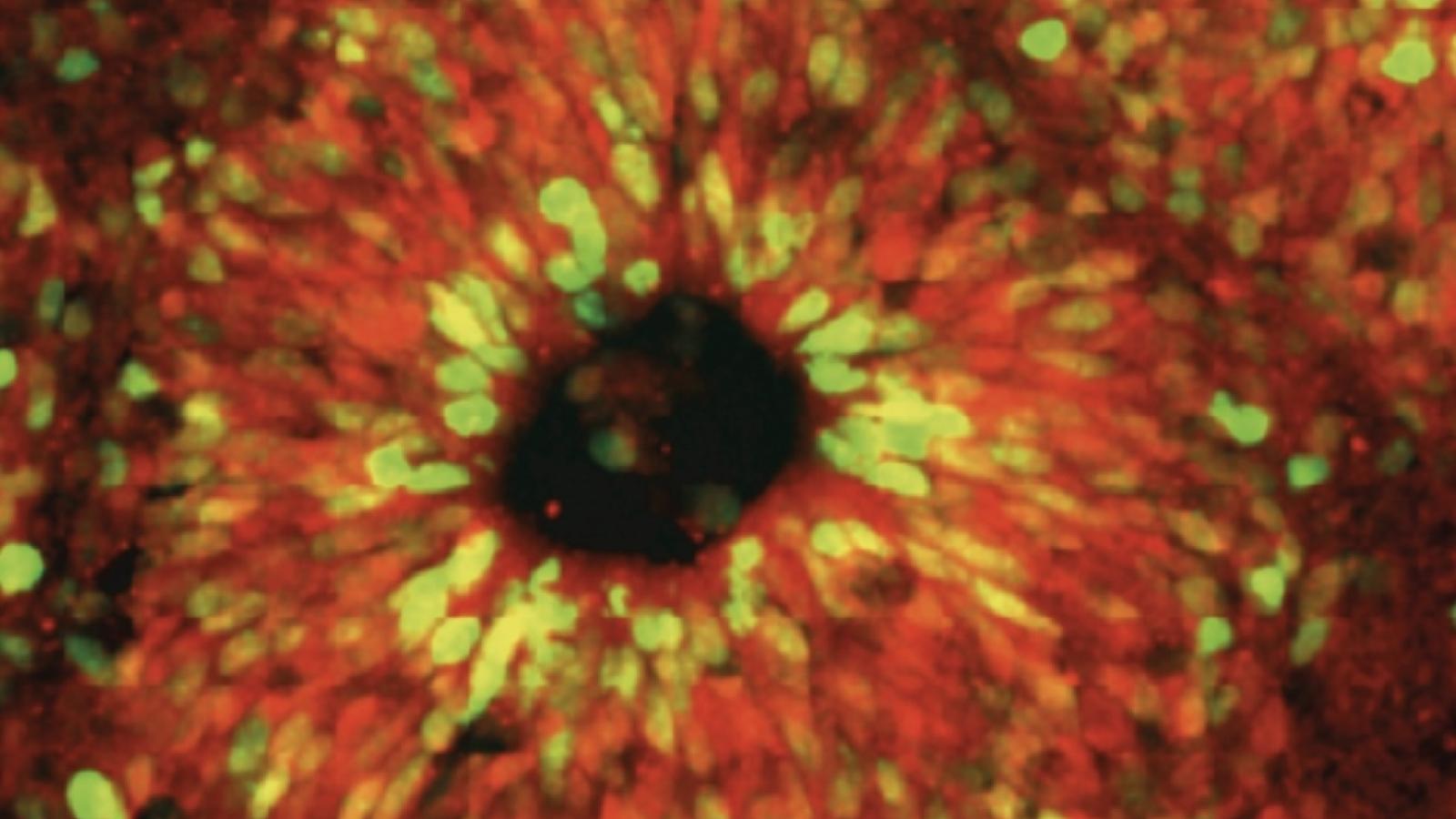
Banner image: A human brain organoid used to model Huntington's disease. Credit: Balmus Lab.