
New research led by Prof Adrian Isaacs (UK DRI at UCL) and Prof Jeremy Carlton (King’s College London & The Francis Crick Institute) uncovers how cells repair damage to their protective outer membrane – and how proteins implicated in neurodegenerative conditions are involved in this process. Published in Developmental Cell, the study provides insights into how dementia and motor neuron disease may develop and opens up new possibilities for treatment to slow progression of these conditions.
What is the challenge?
Mutations in risk genes can lead to faulty proteins which can cause neurodegenerative diseases. CHMP2B and ANXA11 are proteins that can carry disease-causing mutations for frontotemporal dementia (FTD) and motor neuron disease, also known as amyotrophic lateral sclerosis (ALS). Exactly what these proteins do in cells, and why faults in these proteins lead to neurodegeneration, remains unknown.
What did the team do and what did they find?
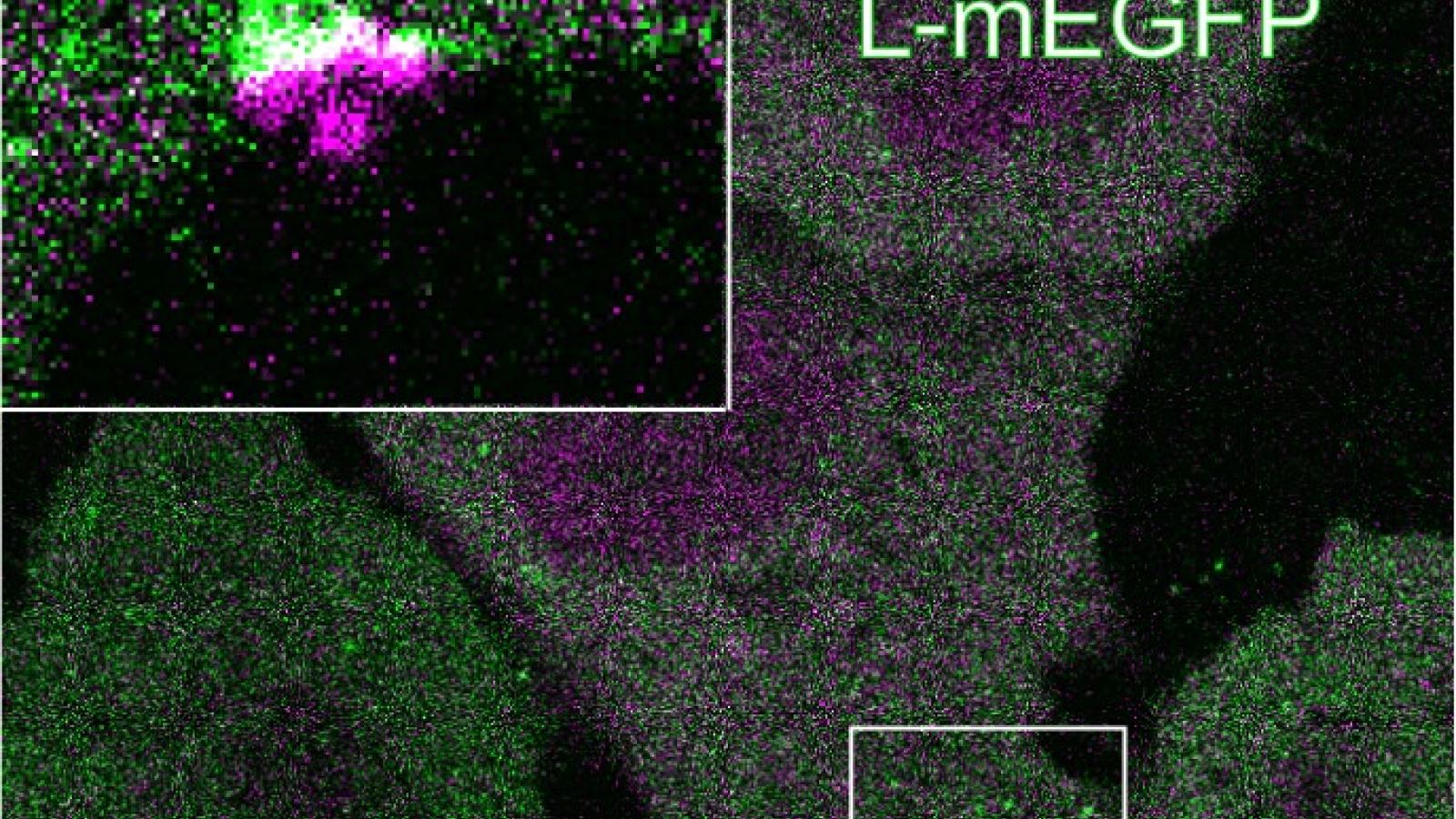
In this study, the researchers used incredibly precise lasers and hole-forming molecules to damage the outer membrane of cells. They showed that ANXA11 and CHMP2B move one after the other to sites of membrane damage. Looking more closely, the team found that disease-causing mutations in both of these proteins affected their ability to move to where the damage occurred. This impaired the cell’s ability to repair damage, and ultimately increased cell death in cells with these mutations.
We have found that two different FTD and ALS risk genes work together in the same pathway to repair damaged membranes and keep cells alive. We think this could be very important in preventing cell death in neurodegenerative diseases. This study advances our understanding of how and why neurodegenerative diseases develop and highlights that enhancing membrane repair could be a promising therapeutic target for future treatments.
Group Leader
Live cell imaging of the sequential recruitment of ANXA11-mCh (magenta) and CHMP2B-L-mEGFP (green) to sites of plasma membrane damage.
What is the impact?
The researchers showed that ANXA11 and CHMP2B both function in the same membrane repair pathway. This suggests that membrane repair could play an important role in reducing cell death and preventing neurodegeneration in these diseases. Enhancing membrane repair capability could be a viable future treatment strategy.
Prof Jeremy Carlton, Group Leader and Wellcome Trust Senior Research Fellow at King’s College London and the Francis Crick Institute, said:
“This work provides fundamental insight into the membrane repair process and explains how cells use these proteins to seal, and then heal, damaged membranes. We hope that this will position membrane repair as a key protective pathway against neurodegeneration.”
Reference: Heffner C, Starling G, Straker L ...The ALS- and FTD-associated proteins annexin A11 and CHMP2B act sequentially in plasma membrane repair. Developmental Cell, 2026; 0
Banner image: Sequential recruitment of ANXA11-mCh (magenta) and CHMP2B-L-mEGFP (green) to sites of plasma membrane damage. Credit: Catherine Heffner.