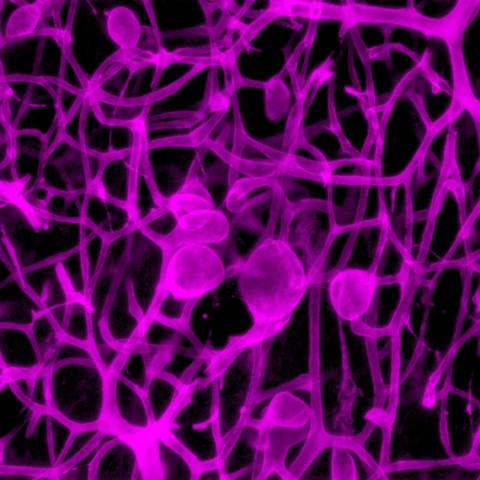
Research led by Prof David Hunt and Dr Bastien Rioux (UK DRI at Edinburgh) has identified a new way to measure inflammation in very large population studies. The approach could help scientists better understand how long-term immune activation may contribute to vascular disease, and whether this pathway may also be relevant to dementia. The study, published in the journal Nature Communications, represents an important step forward in developing anti-inflammation strategies for preventing vascular disease and dementia.
What was the challenge?
Type I interferon proteins are produced by the body in response to viral infection. Some of these proteins are extremely potent, meaning that very low amounts of proteins are needed to provoke an immune response. Measuring interferon concentrations can therefore be very difficult, particularly in very large studies such as UK Biobank.
What did the team do and what did they find?
The team identified a cohort of people within UK Biobank treated with type I interferon therapies, and then analysed the blood of these individuals. Using this approach, it was possible to find a small number of proteins in the blood which were strongly linked to interferon levels.
Together, these proteins form an oligoprotein ‘signature’ which the researchers call MIRO (Markers of type I Interferon Response in Olink). This signature can be used to identify and follow people in UK Biobank to study how type I interferons influence disease.
In this study, the team showed that a high MIRO score was associated with increased risk of autoimmune disease, validating the biological relevance of the signature.
Our work shows how we can use proteomic technologies in very large studies like UK Biobank to unpick important disease mechanisms and identify new treatment targets. The next step in our work is to use the new oligoprotein signature tool to understand the degree to which these proteins modulate the risk of brain diseases and dementia.
Dr Bastien RiouxUK DRI PhD student
What is the impact?
The team has recently shown in a paper in Brain Communications that longstanding exposure to type I interferon can increase the risk of blood vessel disease. The new MIRO tool makes it possible to explore this association in more detail across large population cohorts. The next step will be to use this new tool to analyse brain outcomes in UK Biobank and other studies, to ask whether the interferon pathway could act as a target in preventing vascular disease and dementia.
References
- Rioux B, McGlasson S, Forbes D, Reid KR, Klingseisen A, Berry J, et al. Oligoprotein type I interferon signatures, but not TREX1 variants, increase risk of systemic lupus erythematosus in UK Biobank. Nat Commun. 2026;17(1):1073.
- Rioux B, Zhu F, Ng HS, Zhao Y, Caparrotta TM, Whiteley WN, et al. Risk of cardiovascular and autoimmune disease in people with multiple sclerosis on long-term interferon-beta therapy. Brain Commun. 2025;7(5):fcaf363.
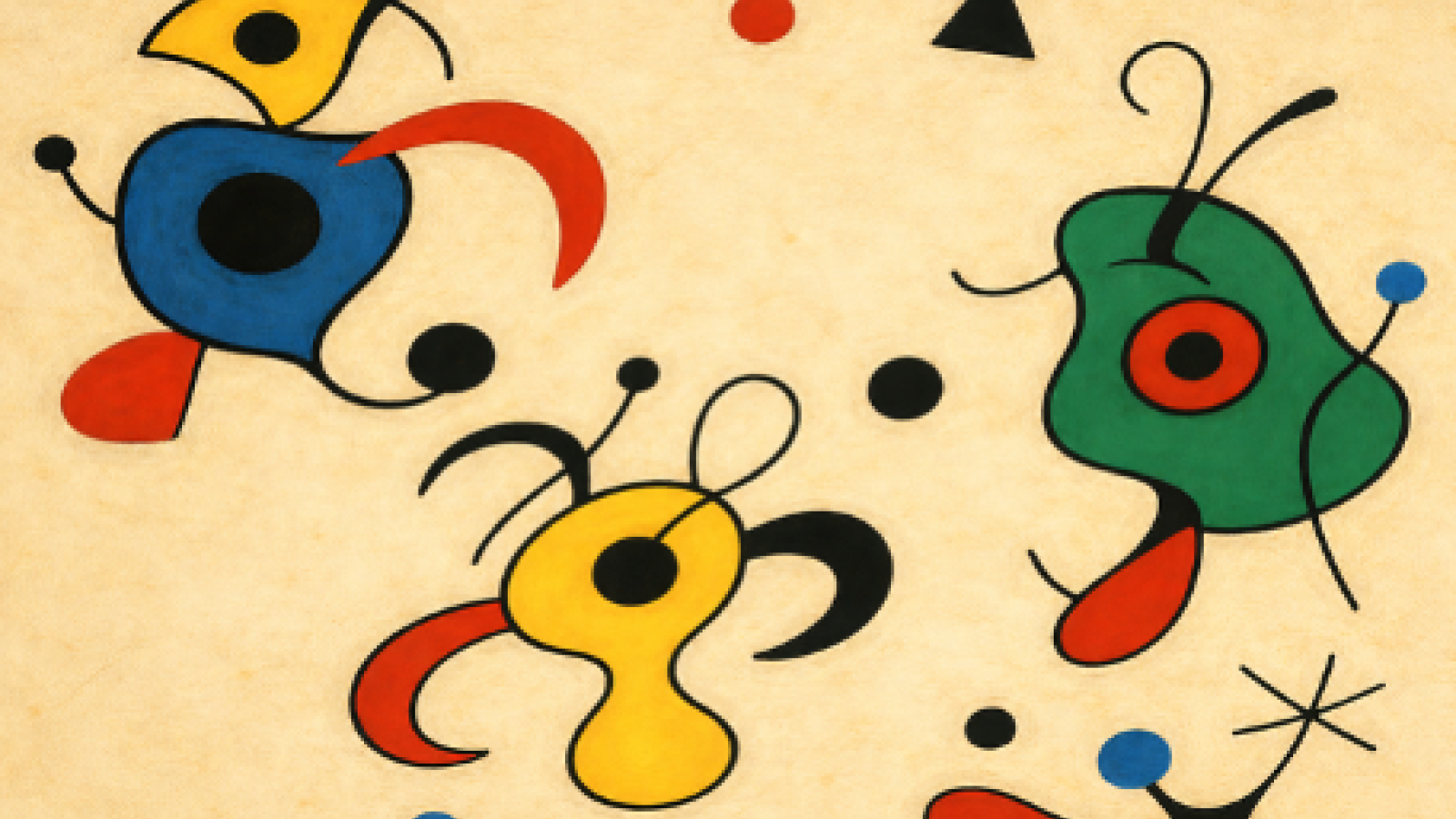
Banner image: Created by Hunt Lab (using DALL-E) showing 3 oligoproteins in blood (RIG-I, SIGLEC1 and IFIT3, which make up the MIRO score) in the style of Joan Miró