
Search
Main content

Prof Siddharthan Chandran

Director & CEO

Dissecting a genetic cause of ALS and FTD and identifying ways to help protect neurons

Biography

Professor Siddharthan Chandran is Director of the UK Dementia Research Institute, and an internationally leading expert in neurodegenerative diseases. Prof Chandran is a practising neurologist and scientist working at the forefront of the emerging discipline of Regenerative Neurology, renowned for his work in motor neuron disease (MND) and MS that combines laboratory and clinical research with a particular focus on human / patient stem cells for his discovery science research. Alongside his UK DRI research, Prof Chandran is Director of the Euan MacDonald Centre for Motor Neuron Disease Research and the Anne Rowling Regenerative Neurology Clinic at the University of Edinburgh. He is also a Fellow of the Royal Society of Edinburgh and the Academy of Medical Sciences.

News

Key publications

Brain communications
Published
Blood-based biomarker discovery in motor neuron disease using nucleic acid-linked immuno-sandwich assay
Authors
Hatice Bozkurt, Katy R Reid, Judith Newton, Jessica Gill, Isaac Chau, Chloe Parker, Hatice Kurucu King, Johnny Tam, Dominic Ng, Maria Stavrou, Paul Baxter, Orla Marland, Karen Burr, Amanda Heslegrave, Elena Veleva, Owen J Swann, Henrik Zetterberg, David P J Hunt, Bhuvaneish Thangaraj Selvaraj, Siddharthan Chandran, Suvankar Pal
Blood-based biomarker discovery in motor neuron disease using nucleic acid-linked immuno-sandwich assay
Nature reviews. Neurology
Published
The World Brain Health Forum: breaking silos for co-ordinated action
Authors
Stéphanie Debette, Natalia S Rost, Siddharthan Chandran, Mathieu Vandenbulcke, Joachim L Schultze, Claudio L A Bassetti, International Organizing Committee of the World Brain Health Forum
The World Brain Health Forum: breaking silos for co-ordinated action

Chandran Lab

Explore the work of the Chandran Lab, Dissecting a genetic cause of ALS and FTD and identifying ways to help protect neurons.
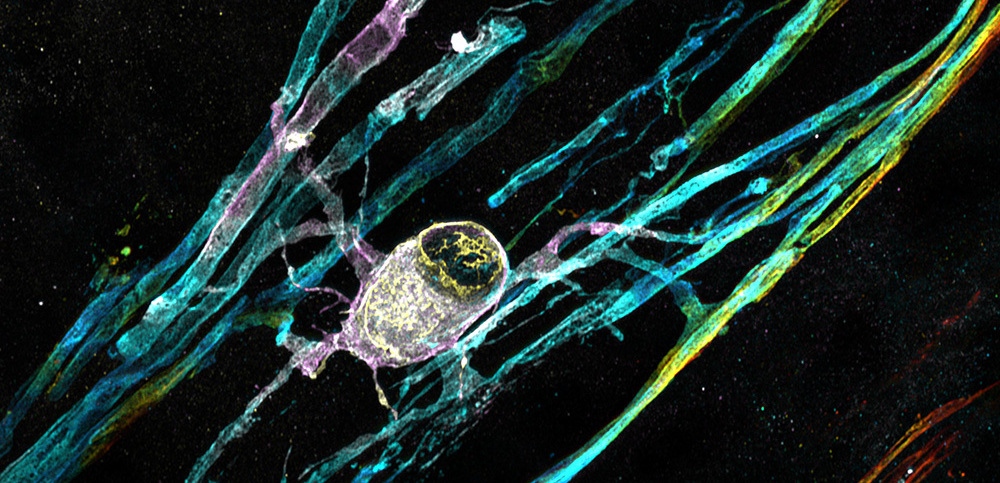
 
Human stem cell-derived myelinating oligodendrocyte can be seen with many myelinating processes wrapped around unstained neurons