Biography
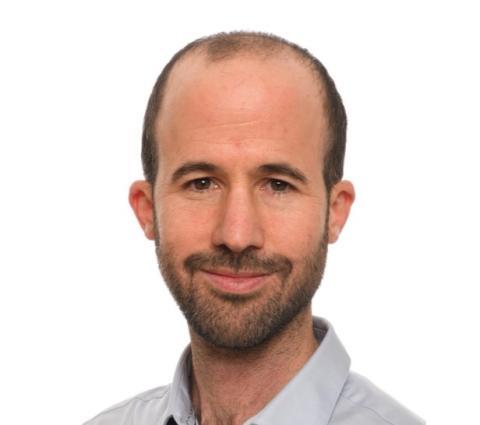
Dr Shlomi Haar is a Senior Lecturer in Cognitive Neuroscience and Associate Head of School for Research at the School of Psychology, University of Surrey. He is also an Honorary Senior Lecturer at the Department of Brain Sciences, Imperial College London, and a UK DRI Emerging Leader at the UK DRI Care Research & Technology Centre.
With a background in biomedical engineering and experience in electrophysiology, Dr Shlomi Haar worked as an engineer in a human neuroimaging lab before pursuing a PhD studying movement encoding in the human brain at Ben-Gurion University of the Negev. In 2017, he was awarded a prestigious Royal Society – Kohn International Fellowship, joining the Brain and Behaviour Lab at Imperial College London. There, he addressed the neurobehavioural changes during the learning process of novel real-life complex motor skills. In 2020, Dr Haar became an Edmond and Lily Safra Research Fellow at the Department of Brain Sciences, Imperial College London, before becoming an Emerging Leader at the UK DRI Care Research and Technology Centre in 2021. In Summer 2025, Dr Haar moved to the University of Surrey as a Senior Lecturer in Cognitive Neuroscience.
In his research programme, Dr Haar investigates the neurobehavioural mechanisms of movement disorders and their treatments, specifically regarding Deep Brain Stimulation in Parkinson’s.
News
Research interest
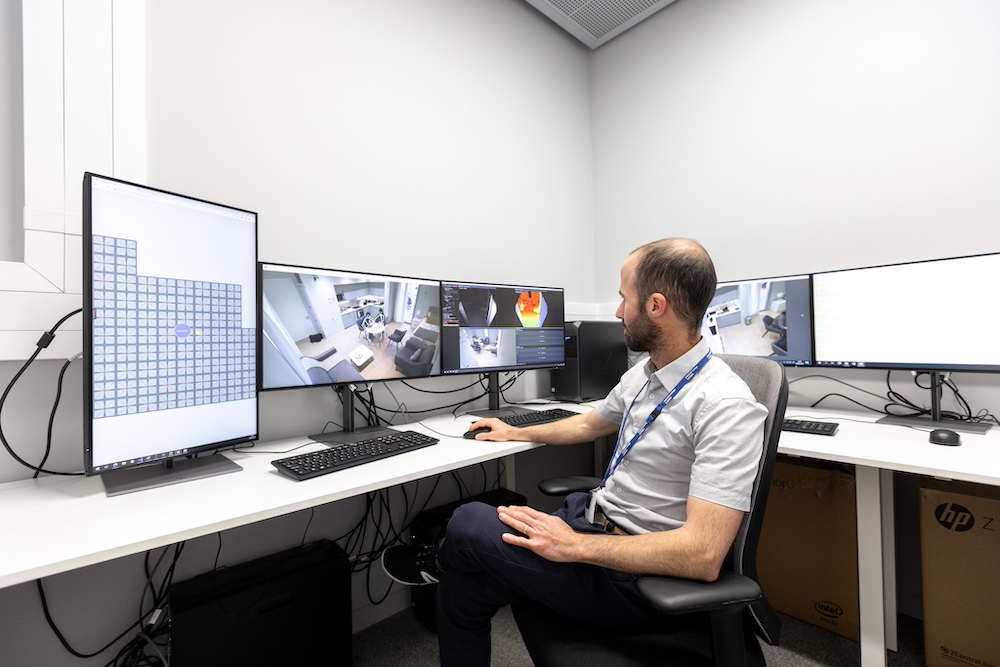
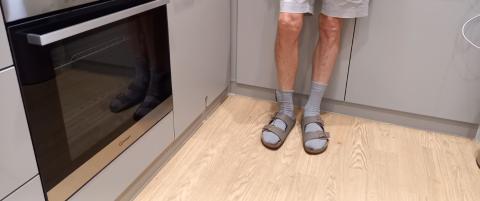
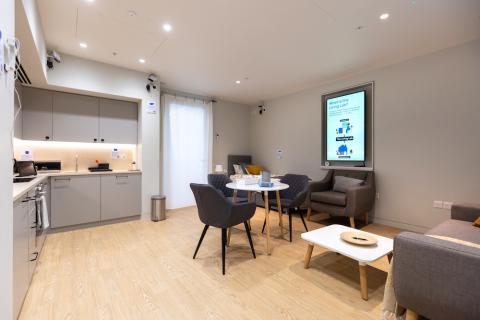
Dr Haar studies the neurobehavioural mechanisms of human movement in health and disease: motor control, motor learning, motor decline, and their neural correlates. He leads interdisciplinary research, using neurotechnology and novel sensors and developing novel data science approaches, to enable Real-World Motor Neuroscience – studying body movement and brain activity during free behaviour and real-world tasks.
His research programme focuses on improving our understanding of the neural network of human motor control and the effects of neurodegeneration on it, predominantly in Parkinson’s disease. His programme aims to improve disease progression and symptom fluctuation tracking in neurodegeneration to enable better care and robust outcome measurements for clinical trials in new disease-modifying interventions. Of specific interest is a better understanding of the neurobehavioural mechanisms of Deep Brain Stimulation (DBS) for Parkinson's disease. This would enable better treatment delivery and leverage smart sensing and AI toward personalised medicine using adaptive closed-loop therapies.
Key publications
Links
Haar Lab
Explore the work of the Haar Lab on developing digital biomarkers to detect and monitor motor conditions