New research led by Dr Emre Fertan and Prof Sir David Klenerman (UK DRI at Cambridge) in collaboration with EISAI UK reveals insight into the small clumps of alpha synuclein that first form in Parkinson’s. Using cutting-edge techniques to analyse these tiny molecules, the study published in the journal Cell Reports Methods, uncovers better understanding of the early events in Parkinson’s, which may lead to new therapeutic targets.
What was the challenge?
Parkinson’s disease is characterised by the accumulation of protein clumps called Lewy bodies in specific parts of the brain, leading to the dysfunction and eventual death of brain cells. We know that these Lewy bodies are primarily composed of a protein called alpha synuclein. Lewy bodies are usually quite large, making them easily visible under microscopes. However, some recent studies have suggested that these large Lewy bodies may not be the primary toxic forms of alpha synuclein, but rather the smaller clumps that are formed first that cause the toxicity.
While this is a promising finding in the search for treatments, these small clumps are exceedingly difficult to study using common laboratory techniques, due to their very small size and low concentration in samples. In addition, the way tissue is processed to harvest these samples may also change the characteristics of the small clumps making them harder to analyse.
What did the team do and what did they find?
In this study, the scientists analysed brain tissue samples taken from people who had died with Parkinson’s compared with samples from people who had died at a similar age who did not have Parkinson’s. They also used a mouse model to examine the small clumps of alpha synuclein, using advanced detection methods developed in the Klenerman Lab, capable of detecting tiny amounts of material. The team also tested different methods of preparing the tissue to see if this affected what they found.
The researchers found that the way these small clumps accumulate was similar in healthy and Parkinson’s brains – and, surprisingly, the number of small clumps present was similar between people with Parkinson’s and healthy individuals. However, they found that the clumps in the Parkinson’s brains were larger in size, meaning the overall amount of alpha synuclein present was greater. Looking more closely, they discovered that it is a reduction in the clearance of clumps, rather than an increase in their production, that pushes cells into a diseased state.
Most interestingly, they found that the diseased cells looked similar in healthy brains and brains with Parkinson’s. The key difference was that the number of diseased cells was increased in the Parkinson’s samples.
They also found that different methods of extracting the protein revealed different types of clumps, and some extraction methods showed a clearer difference between Parkinson’s and healthy brains.
We know that toxic alpha synuclein plays a role in Parkinson’s, but this research helps us better understand how protein clumps begin to form and provides a blueprint to study them. A therapeutic intervention that aids the cell’s intrinsic waste removal mechanisms in clearing away toxic protein could be key to slowing or stopping the progression of Parkinson’s.
What is the impact?
The findings suggest that in Parkinson's disease, the protein doesn't clump together all at once. Instead, it gradually accumulates over time, forming larger clusters in certain brain cells. This slow build-up may be an important part of how the disease develops. Enhancing the clearance of small clumps of toxic alpha-synuclein could be a viable strategy to slow the progression of Parkinson’s.
Reference: Fertan E, Danial JSH, Neame S, Lam JYL, Cotton MW, Burke M, Xia Z, Wu Y, Powney B, Imaizumi Y, Quaegebeur A, Meisl G, Staddon J, Klenerman D. Single-molecule detection methods to study alpha-synuclein aggregation in postmortem Parkinson's disease brains. Cell Rep Methods. 2026 Apr 23:101418. doi: 10.1016/j.crmeth.2026.101418.
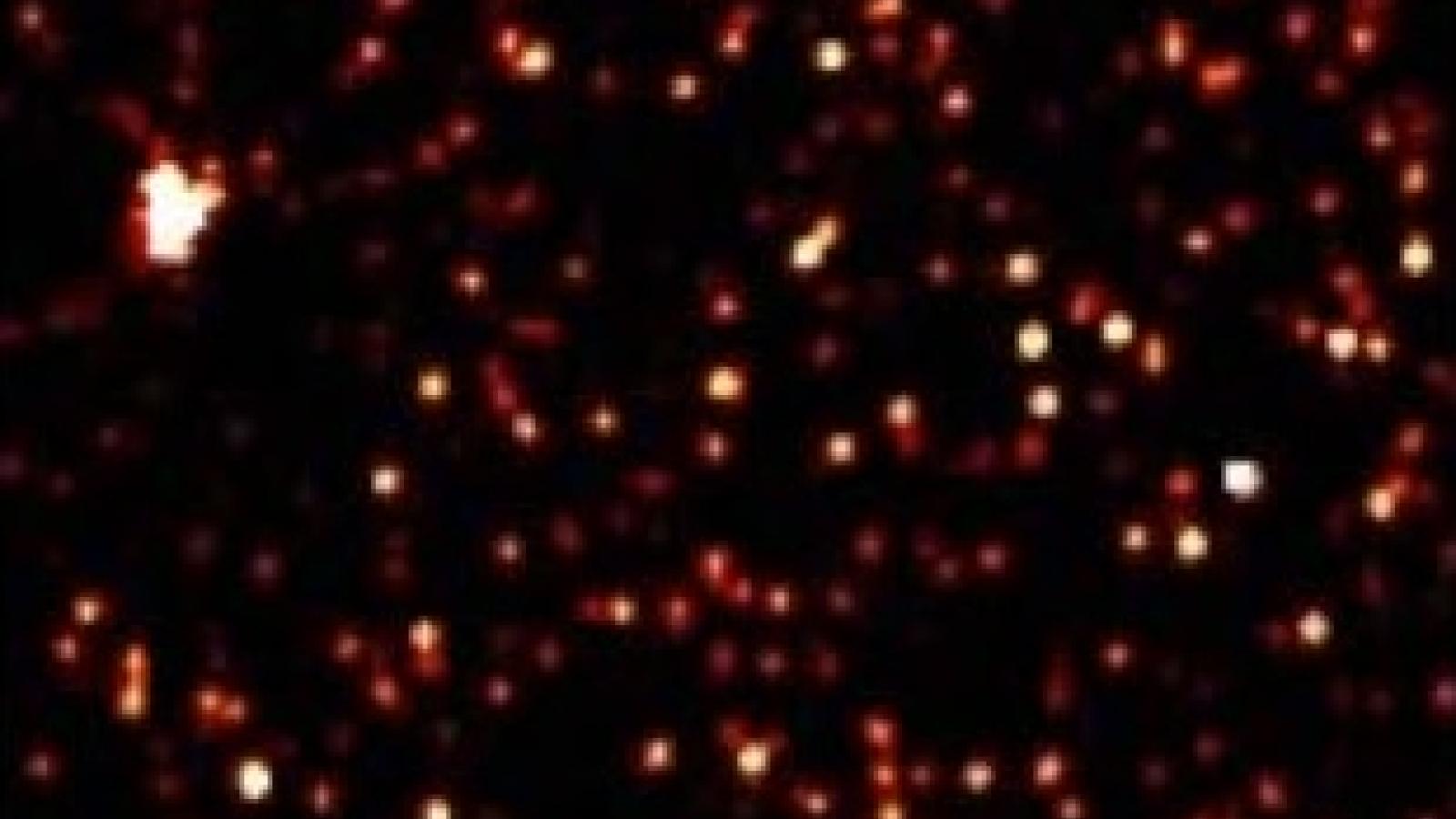
Banner image: alpha-synuclein aggregates from Parkinson’s brain imaged using methods developed by the Klenerman Group. Credit: Emre Fertan and John Danial.