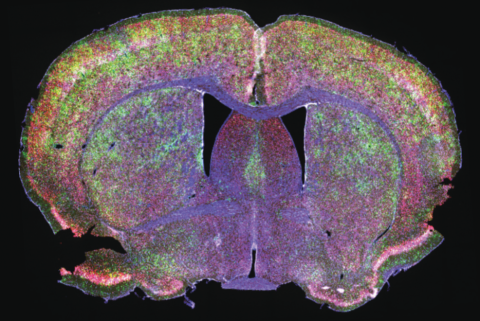
Huntington’s disease is a fatal neurodegenerative condition caused by repetitive expansion of three DNA blocks (C, A and G) in the huntingtin gene. Recent studies have highlighted the role of DNA repair pathways in influencing the age of onset and disease progression. Despite growing insight into the role of these pathways, translating this knowledge into therapies continues to be a challenge, hindered by the lack of robust tools.
Gene therapy approaches have demonstrated that targeting specific DNA repair pathways in Huntington’s is feasible, but barriers include invasiveness, manufacturing cost, and difficulty delivering to the brain. Small molecule drugs are cheaper to produce and typically administered orally, offering a scalable and accessible alternative.
In this project, Prof Gabriel Balmus (UK DRI at Cambridge) and Prof Sarah Tabrizi (UK DRI at UCL) aim to selectively target DNA repair pathways, to develop small molecule disease modifying therapies for Huntington’s.
In stage I of their project, Profs Balmus and Tabrizi collaborated with the ALBORADA Drug Discovery Institute in Cambridge and Prof Britt Adamson (Princeton Uni) to develop a screening platform aiming to identify candidate small molecules that could selectively target the DNA repair pathway. The team successfully developed a tool capable of analysing a high volume of samples quickly.
Their stage II plan builds on this work, aiming to discover small molecule inhibitors that selectively target a specific DNA repair pathway, thereby stopping CAG repeat expansion.
News
Collaborators
UK DRI labs