Search
Main content
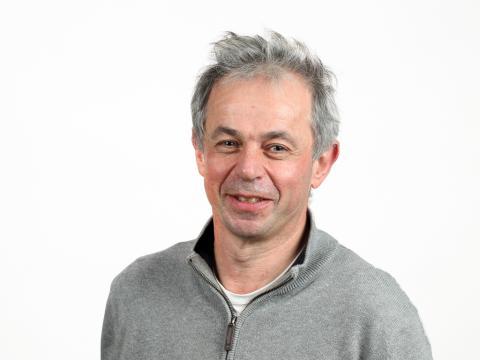
David Klenerman

Prof Sir David Klenerman

(FMedSci FRS)

Group Leader

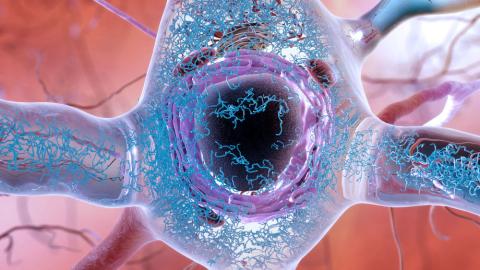
Determining how protein clumps form, damage the brain and change as the different neurodegenerative diseases develop to know which ones to target for therapies

Techniques

Advanced microscopy & imaging, Biophysical techniques, Fluid biomarkers, Software development

Biography

Professor Sir David Klenerman is a physical chemist who graduated and completed his doctorate at Cambridge University working with Professor Ian Smith on infra-red chemiluminescence for his PhD in 1985. This was followed by postdoctoral research at Stanford University, California with Professor Dick Zare on high overtone chemistry. He then returned to the UK and worked for seven years for BP Research in their Laser Spectroscopy Group before returning to the Department of Chemistry, University of Cambridge, progressing to a Professorship. At Cambridge his work has focussed on the development and application of physical methods, particularly laser spectroscopy and single molecule fluorescence, to biological and biomedical problems.  

His recognition includes being knighted by the Queen in 2018, for development of high speed DNA sequencing, and being awarded the Royal Society’s Royal Medal in 2018. He was awarded the 2020 Millennium Technology Prize jointly with Shankar Balasubramanian and the 2022 Breakthrough Prize for Life Sciences and 2024 Gairdner Prize for Life Sciences jointly with Shankar Balasubramanian and Pascal Mayer for next generation DNA  sequencing.
News

Key publications

Nat Commun
Published
Co-aggregation with Apolipoprotein E modulates the function of Amyloid-β in Alzheimer's disease.
Authors
Zengjie Xia, Emily E Prescott, Agnieszka Urbanek, Hollie E Wareing, Marianne C King, Anna Olerinyova, Helen Dakin, Tom Leah, Katy A Barnes, Martyna M Matuszyk, Eleni Dimou, Eric Hidari, Yu P Zhang, Jeff Y L Lam, John S H Danial, Michael R Strickland, Hong Jiang, Peter Thornton, Damian C Crowther, Sohvi Ohtonen, Mireia Gómez-Budia, Simon M Bell, Laura Ferraiuolo, Heather Mortiboys, Adrian Higginbottom, Stephen B Wharton, David M Holtzman, Tarja Malm, Rohan T Ranasinghe, David Klenerman, Suman De
Co-aggregation with Apolipoprotein E modulates the function of Amyloid-β in Alzheimer's disease.
Cell Rep
Published
Super-resolution imaging unveils the self-replication of tau aggregates upon seeding.
Authors
Eleni Dimou, Taxiarchis Katsinelos, Georg Meisl, Benjamin J Tuck, Sophie Keeling, Annabel E Smith, Eric Hidari, Jeff Y L Lam, Melanie Burke, Sofia Lövestam, Rohan T Ranasinghe, William A McEwan, David Klenerman
Super-resolution imaging unveils the self-replication of tau aggregates upon seeding.
Nat Commun
Published
Small soluble α-synuclein aggregates are the toxic species in Parkinson's disease.
Authors
Derya Emin, Yu P Zhang, Evgeniia Lobanova, Alyssa Miller, Xuecong Li, Zengjie Xia, Helen Dakin, Dimitrios I Sideris, Jeff Y L Lam, Rohan T Ranasinghe, Antonina Kouli, Yanyan Zhao, Suman De, Tuomas P J Knowles, Michele Vendruscolo, Francesco S Ruggeri, Franklin I Aigbirhio, Caroline H Williams-Gray, David Klenerman
Small soluble α-synuclein aggregates are the toxic species in Parkinson's disease.

Klenerman Lab

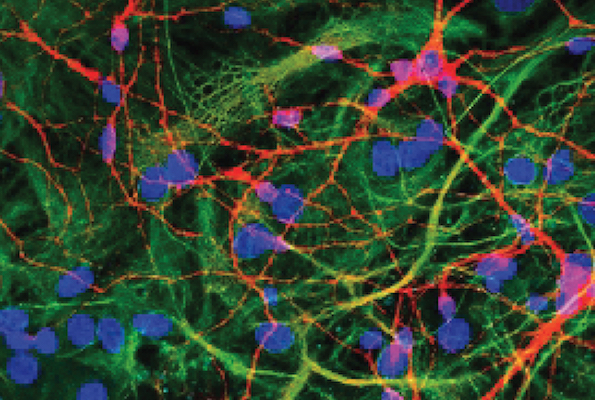
Explore the work of the Klenerman Lab focused on determining how protein clumps form, damage the brain and change as the different neurodegenerative diseases develop to know which ones to target for therapies.
Klenerman culture